Best 12-Cup Food Processor 2026: Room for Big Batches and Family Meals
When you buy through the Amazon links on this page, we may earn a commission at no extra cost to you. Learn more
Last updated October 30, 2026
The best 12-cup food processor for most cooks is the Ninja NF701 Professional XL: its 1,200 peak watts, four Auto-iQ presets and variable slice settings take the effort out of big batches. The GE G8P1AASSPSS suits cooks who want the widest accessory set in a smaller footprint, and the Fohere FP9042 is the entry into the class.
Twelve cups is the bowl's volume to the brim, so a full run holds closer to eight cups of food, enough for a double pizza dough, a large hummus or a gratin for a family meal.
Our 3 picks

Ninja NF701 Professional XL food processor
See on Amazon
GE G8P1AASSPSS food processor
See on Amazon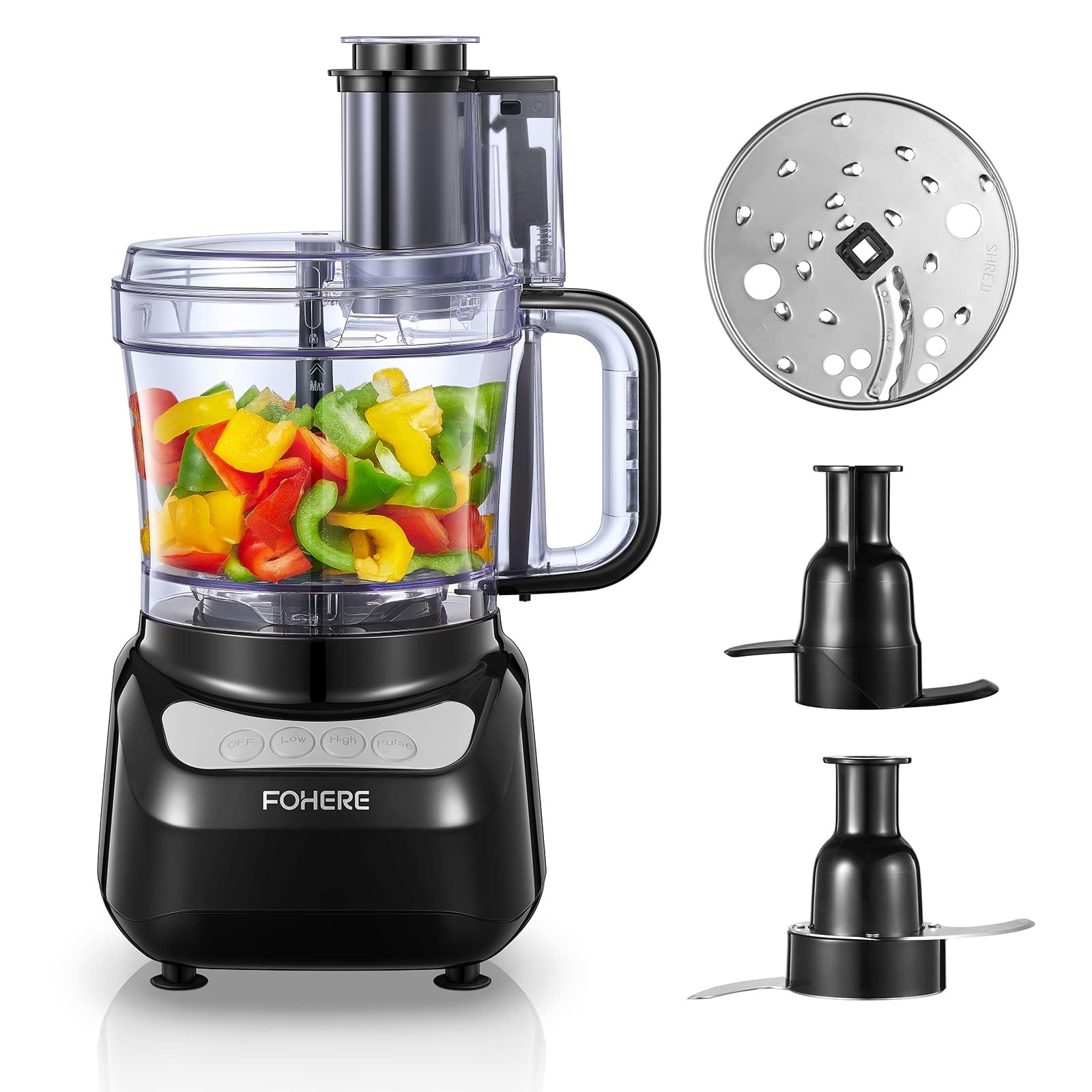
Fohere FP9042 food processor
See on AmazonModel comparison
| Model | Price | Rating | Capacity | Voltage | Best for | |
|---|---|---|---|---|---|---|
| | Ninja NF701 Professional XL food processor | $149.99 as of 10/31 See on Amazon | ★ 4.6 (14,400+ ratings) | 12 cups | 120 V | Cooks shredding blocks of cheddar for big batches get a 12-cup bowl and reversible fine and coarse shredding disc. |
| | GE G8P1AASSPSS food processor | $149.99 as of 10/31 See on Amazon | ★ 4.4 (800+ ratings) | 12 cups | 110 V | Budget buyers who want fries, gratins and hash browns covered out of the box get a french-fry disc plus fine and medium shredding discs. |
| | Fohere FP9042 food processor | $62.58 as of 10/31 See on Amazon | ★ 4.4 (400+ ratings) | 12 cups | not stated | First-time 12-cup buyers get the bowl size and core blades for chopping, slicing, shredding and mixing family meals without paying for extras. |
What 12 cups actually measures in a food processor bowl
The 12-cup figure is the nominal volume of the work bowl, measured to the brim with nothing inside it. Once the blade, the blade stem and the lid are in place, the usable capacity drops noticeably, and the practical fill drops again: a bowl works best around two-thirds full, and less when the contents are mostly liquid.
The consequence is simple. A 12-cup machine is a large-batch machine, not a fill-it-to-the-top machine. The gap between nominal and usable is what decides whether a double recipe fits in one run or needs two, and it is why two machines with the same 12-cup rating can behave differently on the same soup.
Liquid capacity is the most hidden figure in this class and is always below the dry figure. Where a machine's sheet states a liquid maximum, that number governs soups, batters and emulsions, and it is the one to trust over the bowl size. When no liquid maximum is published, keep liquid batches to roughly half the bowl and add in stages.
How a 12-cup bowl maps to real batch sizes
A single run in a 12-cup bowl produces roughly 6 to 8 cups of chopped onion, carrot and celery, enough for a mirepoix that feeds a family meal with leftovers. The same bowl turns out about 6 cups of hummus or vegetable puree, a full gratin or a slaw for a family table, and a two-pound meatloaf or burger mix in one go.
For dough, the limit is lower than the cup rating suggests: a double batch of pizza dough or a double-crust pie fits comfortably, while two loaves of bread sit near the top of what the class handles. Frame it as one run feeds the household, and plan a second run when a recipe doubles past that.
The small-batch limitation is real. A 12-cup bowl under-processes a single onion or a handful of herbs because the food sits below the blade and never reaches it. A nested smaller bowl, where the machine offers one, or a separate mini chopper alongside solves it.
When 12 cups is the right step up from a 7 to 9-cup machine
The upgrade pays off when regular recipes stop fitting in a compact processor. A double batch of pizza or bread dough, a full gratin or slaw for a family, a large hummus or a pot of soup to puree, a two-pound meatloaf mix and a double-crust pie are the jobs that cross the line: they crowd a 7 to 9-cup bowl and fit a 12-cup one in a single run.
If your cooking mostly means chopping an onion and a clove of garlic, a compact machine remains the better fit. The step up buys you batch size, not speed or convenience, and a bigger bowl is harder to clean and takes more counter space.
Judge it by your regular recipes rather than by ambition. If you make those large batches most weeks, 12 cups earns its place; if they appear twice a year, the compact machine you already own will do.
Where a 12-cup processor stops and a 14 to 16-cup one begins
The 12-cup class runs out at very large dough batches, at pureeing a full stockpot of soup in one go, and at entertaining-scale quantities. A 14 to 16-cup machine takes those jobs in a single run where a 12-cup one needs two.
The signs your real need sits above 12 cups are specific: you regularly cook for a crowd, you bake several loaves at once, or you want to puree big pots without splitting the batch. If those describe your kitchen, the next size up is the honest answer.
The trade-off of stepping up is a bigger, heavier machine on the counter, with a taller bowl and lid assembly that is harder to store. Capacity class is the thing to decide first; the rest follows from it.
Fitting a 12-cup machine into a small kitchen
A 12-cup machine brings a wider and taller bowl, a taller feed tube and lid assembly, and a heavier base for stability. Machines in this class run roughly 16 to 17.5 in tall, so check the gap between the counter and the underside of your upper cabinets before you buy.
Take three measurements: the cabinet clearance above the counter, the counter depth and width with the feed tube extended, and the shelf or cupboard where the machine will live if you store it rather than leave it out. A machine that has to be lifted from a low cupboard gets used less than one that stays on the counter.
Weight in this class is a feature and a storage problem at once. A heavy base stays put during dough, which is exactly what you want, but it is also what makes the machine awkward to move. Plan for where it will sit before it arrives.
Dough capacity and the 12-cup bowl
Dough is the job most limited by bowl size in this class. It is dense, it climbs the bowl and it loads the motor, so the flour weight a machine can knead sits well below its nominal cup rating.
Read a stated dough capacity against the batches you actually make. A single pizza dough takes about 3 cups of flour, a two-loaf bread batch about 6 cups, and a double-crust pie about 2½ cups. If the machine's stated dough capacity covers your largest regular batch, it will handle the rest.
Judge a machine by its stated dough capacity rather than by bowl size or wattage alone. A dough blade is convenient, but the S-blade kneads too, and a heavy base matters as much as power when dough is the priority.
Our picks by budget
The Fohere FP9042 is our budget pick because it delivers the 12-cup bowl and the core blades, with a reversible disc and two S-blades, at the entry tier.
The GE G8P1AASSPSS is our mid-range pick because its accessory set is the broadest here: a mini chopping bowl, a dough blade, an emulsifier disc and stackable feed tubes add jobs the entry tier cannot do.
The Ninja NF701 Professional XL is our premium pick because its 1,200 peak watts, four Auto-iQ presets and variable slice settings turn large batches into a hands-off job.
Budget
Mid-range
High-end
Which 12-cup food processor for which cook
Matching the machine to how you cook matters more than the spec sheet, because a 12-cup bowl rewards large batches and punishes small ones.
The family cook who wants one machine to do everything
Four Auto-iQ presets, an extra-large feed chute and variable slicing from thick to paper-thin take the effort out of big batches. The dough blade covers bread and pizza without a second appliance.
The cook who wants maximum accessory range
The widest included set in the group, with grating, French-fry, emulsifier and dough blades and discs, plus a mini chopping bowl for small jobs. It stands 16 in tall and weighs 10 lb, the friendliest footprint here.
The first-time 12-cup buyer
Twelve cups and the core blades at the entry tier: chopping, slicing, shredding and mixing for family meals. The dual-locking safety and anti-slip feet make it a sensible first large machine.
Our verdict on the best 12-cup food processors
The Ninja NF701 Professional XL wins on power, presets and slice control for the cook who wants the machine to do the thinking. The GE G8P1AASSPSS is the versatility pick, with the broadest accessory set and the friendliest footprint at 16 in tall and 10 lb. The Fohere FP9042 is the entry into the class, with the bowl size and core blades at the lowest tier. If you regularly cook above 12 cups, step up a size.
Detailed model analysis
A 12-cup machine earns its counter space on batch size, so the figures that matter are the bowl, the dough capacity and the height under your cabinets.
Ninja NF701 Professional XL food processor
The Ninja NF701 Professional XL is our pick for big batches. It pairs a 12-cup bowl with a 1200-peak-watt motor and Auto-iQ presets.
The presets cover chop, slice, shred, puree and mix dough. You pick a job instead of timing pulses yourself, which helps with a double batch of dough or a pile of vegetables.
The reversible shredding disc gives fine or coarse shreds, and slice settings run from thick to paper-thin. The XL feed chute has a 3-part pusher, so large pieces need less pre-cutting.
A dough blade is included for bread and pizza dough. The bowl, lid, discs and blades are dishwasher safe, and a 1-year limited warranty covers it.
The limits are practical. It weighs 12.3 lb and is tall. The 1200 watts is a peak figure, so it does not tell you steady running power.
It suits cooks who shred, slice and knead in big batches and want presets to do the guiding.
- Brand: Ninja
- Capacity: 12 cups
- Peak power: 1200 W
- Voltage: 120 V
- Preset programs: 4
- Weight: 12.3 lb
GE G8P1AASSPSS food processor
The GE G8P1AASSPSS suits cooks who want the most attachments in the box. It comes with 9 accessories and a 12-cup bowl, covering fries, hash browns, gratins and bread dough without extra purchases.
The set includes a grating disc, a french fry disc, a dough blade, an emulsifier disc, a mini S-blade, and fine and medium shredding and slicing discs. A spatula and pouring shield round it out.
A 550-watt motor offers High, Low and Pulse settings, so you control how coarse the chop gets. The mini chopping bowl suits garlic, herbs or nuts when 12 cups is too much.
The large feed tube has 3 openings and stackable inner tubes, so whole or large ingredients fit and smaller ones go in separately. Bowl markings help with portions.
An ergonomic handle helps when lifting a full bowl. Suction cup feet hold it in place, and built-in cord storage keeps the counter tidy. The bowl and accessories are dishwasher safe, and a limited 1-year warranty applies.
The trade-off is size. At 10 lb, it has a bigger footprint than the Ninja NF701 Professional XL food processor.
- Brand: GE
- Capacity: 12 cups
- Motor power: 550 W
- Voltage: 110 V
- Speeds: 3
- Dimensions: 10.3 in deep, 12.2 in wide and 16 in high
Fohere FP9042 food processor
The Fohere FP9042 is the simplest way into the 12-cup class. It gives you the big bowl and the core tools for chopping, slicing, grating and mixing.
A 500-watt motor offers 2 speeds plus a pulse setting. Use low for chunkier soup vegetables and high for smoother soups or dips. It also crushes ice.
You get a stainless steel S-blade for meat and tough ingredients, a plastic S-blade for pasta, a dough blade, and one reversible disc for grating carrots and slicing cheese.
An extra-wide feed chute lets you load a lot at once, and two feed hoses and two push rods come in the box. Parts are dishwasher safe, and containers and accessories are BPA-free certified.
A dual-locking mechanism keeps it from running unless the bowl and lid are assembled. Overheating protection and anti-slip feet are included. The limit: you get one reversible disc only.
It suits first-time 12-cup buyers who want chopping, slicing, shredding and mixing for family meals without a pile of extras.
- Brand: Fohere
- Capacity: 12 cups
- Power: 500 W
- Blade material: Stainless steel
- Cleaning: Dishwasher safe
- Safety feature: Safety lock
Frequently asked questions
Most doubts about this size come down to what the 12-cup number really measures and where a large bowl stops being an advantage.
Is a 12-cup food processor big enough for a family of four?
Yes for most meals. One run handles about 6 to 8 cups of chopped vegetables, a full gratin or slaw, a large hummus, a two-pound meatloaf mix or a double pizza dough. Only very large batches, such as several loaves at once, need a second run.
What does the "12-cup" rating actually mean, dry or liquid?
The rating counts dry contents only. Liquid capacity is always lower and is often published separately. Where a machine states a liquid maximum, that figure governs soups, batters and emulsions rather than the 12-cup number.
How much dough can a 12-cup food processor knead?
Less than the bowl size suggests. Dough is dense and climbs the bowl, so plan on a flour weight well under 12 cups. Check the stated dough capacity against your largest regular batch: about 3 cups of flour for a pizza dough, about 6 for two loaves.
Why is my 12-cup processor bad at chopping small amounts of herbs or one onion?
The food sits below the blade in a large bowl and never reaches it, so it gets bruised rather than chopped. Keep small jobs to a cup or two and pulse in short bursts, or use a machine whose kit includes a dedicated small bowl.
Is 12 cups enough, or should I buy a 14- or 16-cup machine?
Twelve cups covers family meals, a double pizza dough and a large hummus. Step up if you regularly cook for a crowd, bake several loaves at once or want to puree a full stockpot in one run. The cost is a bigger, heavier machine.
What can't a 12-cup food processor do well?
It is poor at smoothies, crushing ice, grinding coffee, hot liquids, large volumes of thin liquid and tiny batches. It also struggles with perfectly even thin slices of soft tomatoes. A blender or a mini chopper covers those jobs better.