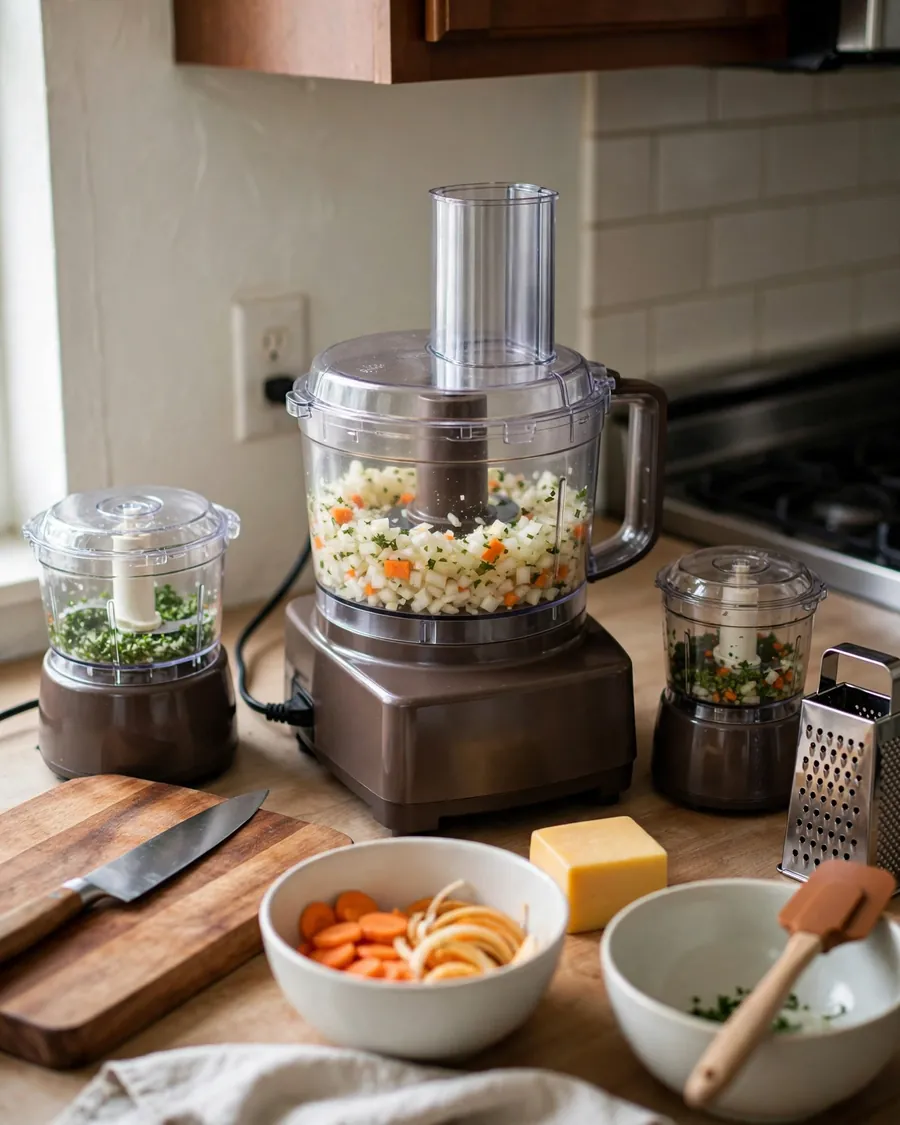
Find the Right Food Processor at the Best Price

Pick a food processor with confidence by knowing which bowl size, power and discs fit the way you cook.

  • Independent food processor comparisons
  • 100% independent picks
  • Updated as models change

What do you need?

See all types →

What is your project?

Tell us what you want to cook, and we will point you to the food processor that fits your kitchen and your routine.

See all uses →

The brands we analyzed

See all brands →

Our buying guides to help you pick the right food processor

These are the guides we wrote from our analysis of the market, each one built to help you narrow your choice quickly. Our picks stay focused on what matters in your kitchen.

See all our buying guides →

How we work

  1. 1 What we look at We study the full-size, compact and mini food processors, electric choppers, blender combos and cooking models listed on Amazon, starting from each listing's spec sheet: wattage, voltage, number of speeds, material and included components.
  2. 2 How we read reviews We analyze aggregated buyer reviews alongside specs such as wattage, blade material and bowl material, looking for patterns on stalling with dough, noise, staining, odors and how easily the parts clean.
  3. 3 How we rank and recommend We rank by use, such as kneading dough, pie crust, nut butter or hummus, and by budget. Motor power, bowl size, blade material and care instructions decide which models rise in each guide.
  4. 4 How we keep pages current We update our pages as models change or new ones appear, date the Amazon prices we show, and add new models as their listings and spec sheets appear, so each ranking reflects current specs, reviews and prices.

What to know before you buy a food processor for your kitchen

Choosing the right food processor raises plenty of questions, from bowl size to blade types and cleanup. Here are the answers and tips we wish we had found in one place.

See all our articles →

Why use our comparisons

We bring specifications, customer feedback and prices together so you can compare food processors quickly and with confidence. Our site is independent, and no advertiser influences the picks.

We cover every family of food processor you might need
Full catalog

We cover every family of food processor you might need

Whether you want a compact chopper or a full-size machine, our catalog is built to cover every family. You can browse by type and see how each style fits a different kind of cooking.

We include cordless choppers, quiet models, blender combos, dicing and slicing machines, spiralizers and continuous-feed processors. Each type has its own strengths, and we make those differences easy for you to spot.

If you are not sure where to start, begin with the type that matches your most frequent recipe. From there, you can compare models side by side and narrow your list without wading through endless product pages.

We rank food processors using data, not advertiser influence
Data-driven method

We rank food processors using data, not advertiser influence

Our rankings rest on manufacturer specifications such as motor power, bowl capacity, blade types and included discs. These facts give you a clear, objective starting point for every comparison.

We then weigh aggregated customer reviews, looking for patterns in what buyers praise and what frustrates them. Durability, noise and ease of cleaning often show up, and they shape how we rank each model.

Finally, we factor in current prices so you see real value, not just features. No advertiser pays to influence the order, which means the picks you read are independent by design.

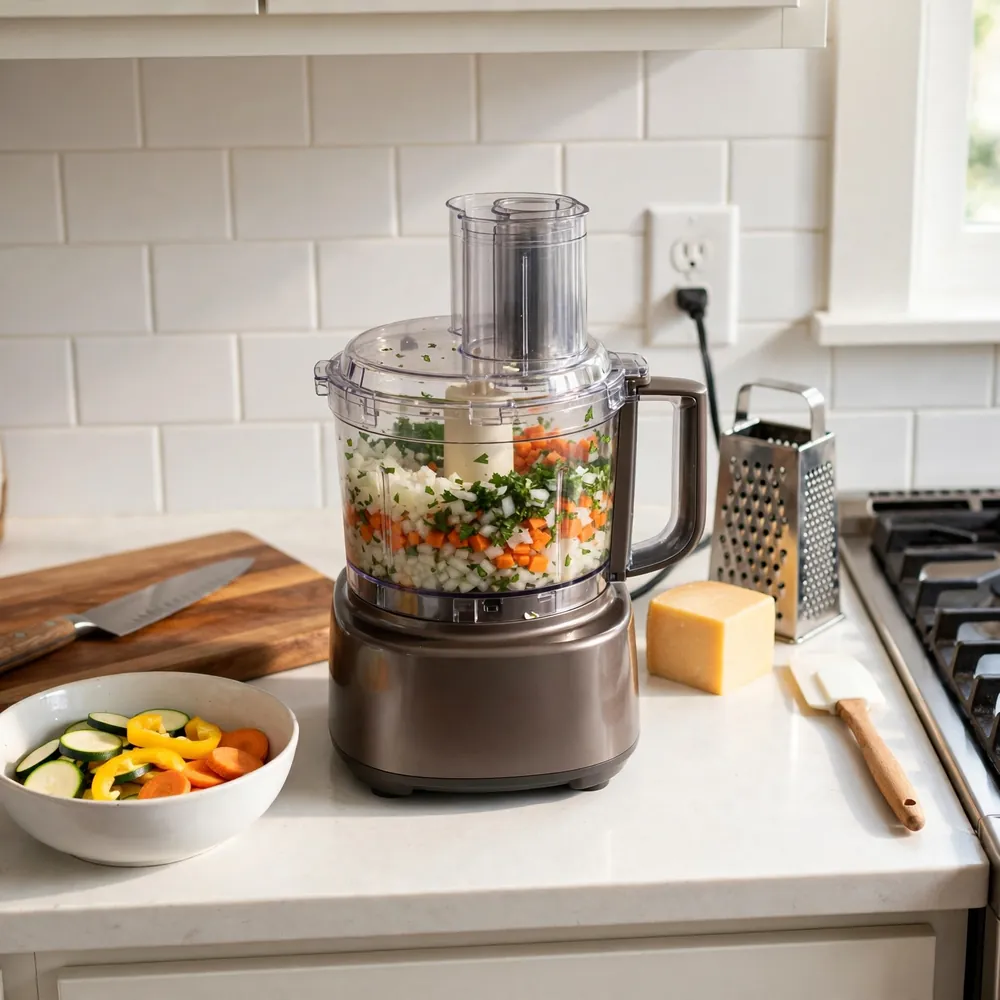
We help you match a model to your cooking and space
Advice by use

We help you match a model to your cooking and space

Start with how you cook. If you mostly chop onions and herbs, a compact chopper may be all you need. If you prep for a crowd, a larger bowl and a wider feed chute will save you time.

Think about your counter and cabinet space too. A bulky base can be a hassle if storage is tight, while a model with nested attachments keeps your kitchen tidy and your discs easy to find.

Also consider who is cooking. Households that value calm mornings may prefer a quieter motor, and busy cooks often appreciate parts that go in the dishwasher. We point out these details so you can choose with confidence.

We watch prices so you can find real value for money
Value tracking

We watch prices so you can find real value for money

A low sticker price does not always mean a good deal. We look at what you get for the money, including included attachments, bowl size and build quality, so you can judge the full package.

Prices on food processors move often, especially around major sales. We keep an eye on price changes so our guides point you toward models that offer strong value at the time you read them.

When two models look similar, the better choice is often the one with fewer compromises for your needs. We highlight those trade-offs clearly, so you can spend where it matters and save where it does not.

300+ Food processors analyzed
1,600,000+ Customer ratings analyzed
30+ Buying guides published

Frequently asked questions

These answers cover the questions cooks ask most about dough, soup, ground meat and cordless models before they buy a food processor.

How do you keep the discs from getting lost?

Loose discs are the first thing owners lose, so decide where they will be kept before the machine comes home. If the processor will not live on the counter, check its weight and height against the shelf where it will go, and measure cabinet height and counter depth before you commit to a large bowl on a heavy motor base.

How do you decide between a full-size food processor and an electric chopper?

Match the machine to your usual dishes. Mini processors and electric choppers hold about 2 to 5 cups and suit one or two people who chop herbs, onions, nuts and small sauces. Mid-size processors hold 7 to 10 cups and cover slicing, shredding, chopping and pureeing, so go larger if you cook for a family or shred cheese and vegetables often, and choose the chopper if counter space is tight.

What should you check before you buy a food processor if you shred cheese and vegetables often?

If you shred cheese and vegetables often, go for a mid-size processor with a 7 to 10 cup bowl rather than a mini chopper, since that size covers slicing, shredding, chopping and pureeing. Check that a slicing disc and a shredding disc are both in the box alongside the S-blade, because those three cover most daily tasks. Also look at the motor: full-size 7 to 16 cup processors typically run 400 to 750 W, and treat wattage as a guide rather than a ranking, since it is not directly comparable across brands.

Is there a cordless food processor?

Yes, as cordless choppers in the 2 to 5 cup range. They suit onions, herbs and nuts. Battery power trades off against the bigger batches and tougher tasks a corded mid-size model handles.