
Best Non-Plastic Food Processor 2026: Keeping Plastic Out of Your Food Prep
When you buy through the Amazon links on this page, we may earn a commission at no extra cost to you. Learn more
Last updated October 30, 2026
The Ganiza GC10 is the best non-plastic food processor for most buyers because it ships with two 8-cup bowls, one glass and one SUS 304 stainless steel, so the two largest surfaces your food touches are not plastic. Its two sets of stainless S-blades cover chopping and milling, and the spring-loaded blades stop turning the moment you lift the motor away.
No electric food processor is completely plastic-free: the blade hub, the lid and the bowl-to-base coupling are plastic on every model. The realistic goal is a glass or steel bowl with plastic reduced to small, brief-contact parts, and that is what the picks below deliver.
The best non-plastic food processors of 2026

Ganiza GC10 food processor
See on Amazon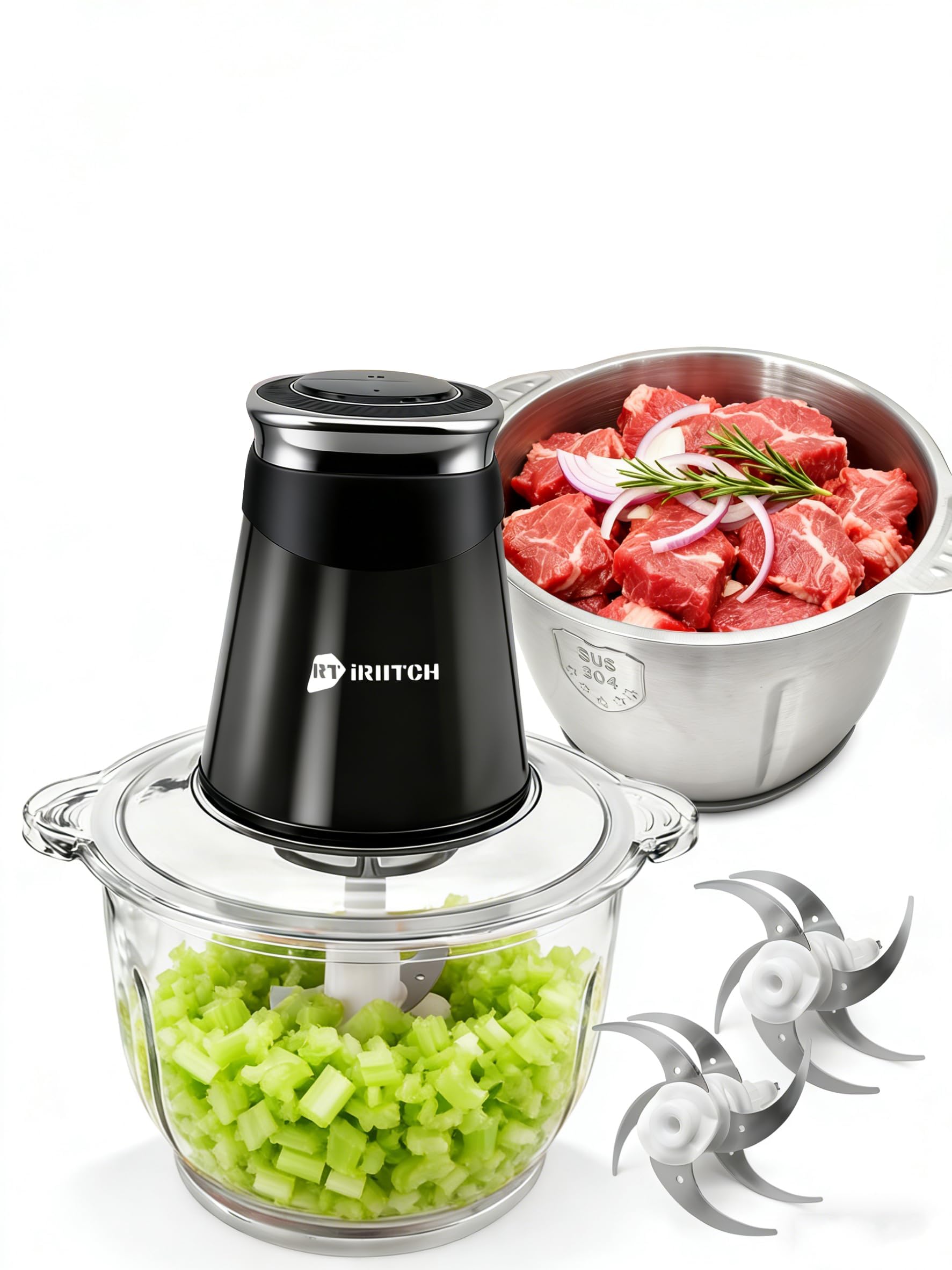
Rtiriitch RT-302
See on Amazon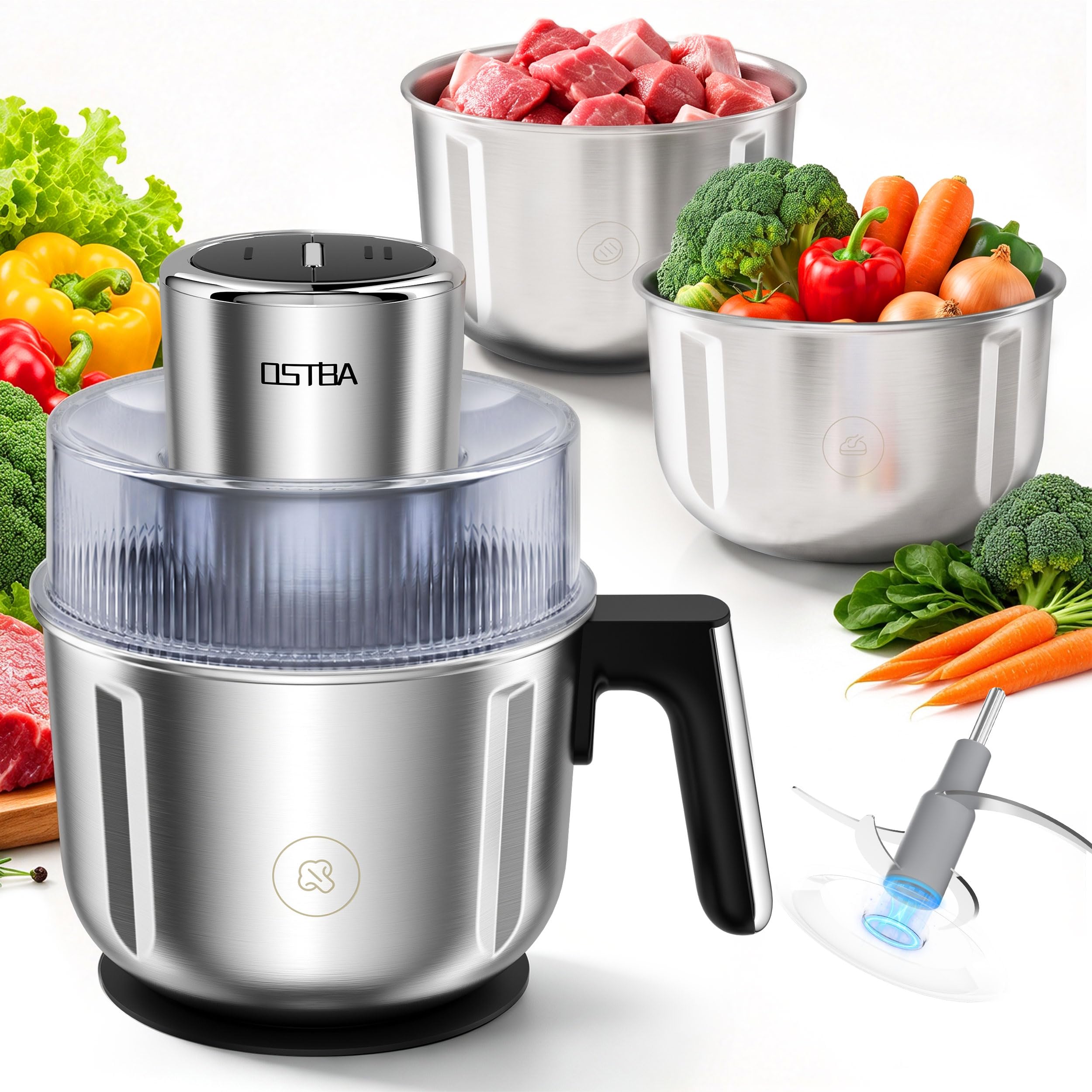
Ostba 25JM08-Q food processor
See on AmazonModel comparison
| Model | Price | Rating | Power | Weight | Voltage | Best for | |
|---|---|---|---|---|---|---|---|
| | Ganiza GC10 food processor | $55.99 as of 10/31 See on Amazon | ★ 4.4 (7,700+ ratings) | 450 W | 5 lb | 120 V | Cook who wants glass for vegetables but not raw chicken residue gets a second stainless bowl. |
| | Rtiriitch RT-302 | $39.99 as of 10/31 See on Amazon | ★ 4.5 (100+ ratings) | 500 W | 5.5 lb | 120 V | Cooks wanting a big see-through bowl for produce plus a steel bowl for meat get both here. |
| | Ostba 25JM08-Q food processor | $79.99 as of 10/31 See on Amazon | ★ 5.0 (11 ratings) | 350 W | 5.1 lb | not stated | Steel-only cooks needing several batch sizes and no glass risk get three nesting stainless bowls. |
 | Kitchen in the Box MG01 Meat Grinder | $45.19 as of 10/31 See on Amazon | ★ 4.8 (9 ratings) | 400 W | 5.3 lb | 120 V | Households that grind meat often want a dedicated steel bowl kept apart from produce, and get it. |
What makes a food processor non-plastic
A brushed steel body tells you nothing about what your food touches. The check is food contact, not exterior finish: a machine can wear a metal shell and still hand you a plastic bowl, and a machine with a plastic shell can pass on the part that counts.
The surfaces that touch food, in order of importance
- The bowl: the largest area and the longest contact time, by a wide margin.
- The blade and its hub: the cutting edge is steel on nearly every model, but the hub it spins on is plastic.
- The lid underside: splashed constantly, rarely inspected.
- The feed tube and pusher on full-size machines, where food slides down a plastic chute.
- Seals and gaskets: silicone or rubber, in contact with whatever reaches the lid rim.
The blade hub is the universal exception
On every electric food processor, the blade mounts on a plastic hub or coupling. That is the part no maker eliminates, because steel on steel at the motor shaft would seize and transmit heat. So non-plastic means the bowl and blades are glass and steel, and the plastic contact is reduced to a small part that touches food for seconds.
The drive coupling between bowl and base
The coupling that transfers power from the motor up into the bowl is often plastic even when the bowl is steel, and it is usually not disclosed in the listing. It sits under the bowl, so it sees drips rather than immersion, but it is worth knowing it exists before you assume a steel bowl means an all-steel drive train.
Food-contact plastic versus the rest
The motor housing, the outer shell and the control buttons are plastic on most machines and irrelevant to this question. They never touch food. Sorting the two categories is the whole exercise: you are buying a non-plastic contact surface, not a non-plastic appliance.
A two-minute check before you buy
Read the bowl material line first. Then look for a stated blade-hub material, which most listings omit. Then open the lid photo and look at the seal. If the hub material is not stated, ask the seller directly before ordering. And keep in mind that "non-toxic" has no legal definition for appliances, so disclosed materials are what you can judge by.
Plastic-free bowl materials and what each one does to your food
Glass and stainless steel are both inert in the sense that matters: neither reacts with tomato, citrus or oil, and neither holds onto the smell of garlic or the color of turmeric the way a plastic bowl does.
Glass
Glass is inert, see-through and does not retain odor or stain. You can watch texture form through the wall, which is why it suits sauces, pesto and baby food. The trade-offs are weight and breakability: a full glass bowl is heavy, and a drop or a thermal shock can end it. Heat tolerance is the real limit. Glass bowls are for cool and warm food, not hot soup straight off the stove, and the owner's manual of the machine sets the exact ceiling.
Borosilicate versus soda-lime glass
Borosilicate resists thermal shock better than soda-lime glass, which is the cheaper material used in many bowls. Look for clear, lead-free glass, and treat any colored or recycled glass with suspicion, since lead has turned up in decorative glassware.
Stainless steel
Food-grade stainless is graded 304 (also written 18/8) or 18/10. Steel is lighter than glass for the same volume, will not shatter, and takes heat and acid without complaint. It is opaque, so you judge texture by sound and by lifting the lid. It dents rather than breaks. The one caveat is nickel: a minority of people react to it, and 18/8 and 18/10 both contain nickel.
How each handles hot and acidic ingredients
Steel takes heat and acid without complaint. Glass takes acid without complaint but not sudden heat, so let a hot mixture cool before it goes in. Both avoid the plastic-bowl problems of staining, holding odors and clouding over time.
Why dual-bowl sets matter for food safety
A steel bowl for raw meat and a glass bowl for produce keeps cross-contamination down and lets each material do what it does best: steel for heat and force, glass for visibility. It also means one wash cycle never has to make a bowl safe for the other job.
Which Parts of a Non-Plastic Food Processor Are Still Plastic, and How to Spot Them Before You Pay
The bowl is the advertised part. The plastic hides in the lid, the lid seal, the feed tube and pusher, the blade hub, the bowl-to-base coupling and the safety interlock.
Why listings stay quiet about them
Bowl material is a selling point, so it gets a line in the title. Hub material is not a selling point, so it usually goes unmentioned. That asymmetry is why a listing can look fully non-plastic and still ship a plastic hub.
How to read a listing in order
- The bowl material line.
- The blade material line.
- The "included" list, which tells you how many bowls and blade sets you get.
- The photos, especially the lid underside and the blade stem.
Two failure modes to recognize
A metal-bodied machine with a plastic bowl fails the check entirely, because the bowl is the surface that matters. A glass-bowl machine with a plastic lid still passes on the part that counts most, since the lid sees splashes rather than a full load.
Silicone seals are still polymers
Silicone gaskets are the least concerning plastic contact in the machine, but they are plastic in the chemical sense. They also trap residue and degrade with heat, so they need hand washing regardless of what the rest of the bowl tolerates.
When the listing will not tell you
If the blade-hub material is not stated anywhere, ask the seller before you buy. A seller who cannot answer is telling you something too.
How non-plastic parts change cleaning and dishwasher use
Glass and steel bowls come out of a dishwasher unchanged. Plastic bowls do not: heat and detergent cloud them, scratch them and leave them holding odors, which is one of the main reasons people move away from them in the first place.
What can go in the dishwasher?
Glass and steel bowls are dishwasher safe in practice. Steel should be dried after the cycle to avoid water spots. Check the machine's care instructions for the exact parts listed as dishwasher safe, since lids and hubs vary.
What needs hand washing on every machine
The lid seal and gasket trap residue and degrade with heat, so rinse them promptly and wash them by hand. The motor base never goes in water on any machine; wipe it only.
Handling a wet glass bowl
A glass bowl is heavy and slippery when wet. Carry it with both hands, set it down before you reach for anything else, and check the rim for chips before each use.
Keeping the hub clean
Remove the blade and wash it promptly so residue does not dry in the crevice where the blade meets the hub. That crevice is the hardest spot on the machine to get clean once food has set in it.
Weight, handling and storage of glass and metal machines
A glass bowl of the same capacity as a plastic one weighs substantially more, and a full 8-cup glass bowl is a two-hand lift. Pouring from it takes care, especially with a sauce or a batter that shifts as you tip.
Lifting and pouring
Steel bowls are lighter for the same volume and easier to lift and pour, at the cost of being opaque. If you regularly move a full bowl from counter to stove, steel is the friendlier material.
Countertop stability
A heavy glass bowl full of food raises the center of gravity. Check the base footprint and the non-slip feet before buying, and set the machine on a flat, dry surface rather than a towel or a crowded counter edge.
Planning storage
Measure the tallest bowl with its lid against your cabinet height before you buy, and decide where a second bowl will live. Bowls either stack or nest depending on the model, and a dual-bowl set takes more shelf space than a single-bowl machine. In a small kitchen, that second bowl is the deciding factor as often as the motor is.
Are non-plastic food processors worth it for you?
A food processor runs for seconds at a time on mostly cold food, so it is a smaller exposure than cookware and hot-food storage. If you are working through a list of plastics to remove, prioritize the pans you cook in and the containers you store hot food in first.
When a non-plastic machine earns its place
- You cook often with tomato, citrus, garlic, oils or warm ingredients.
- You make baby food and want a bowl you can see through.
- You dislike the smell and staining a plastic bowl picks up.
- You are replacing a bowl that has clouded or scratched.
When a plastic bowl is a reasonable choice
If you mainly pulse cold, dry or firm ingredients for a few seconds, the exposure is small. If you need slicing, shredding or dough, glass-bowl machines are choppers, and a full-size processor with discs does those jobs with a plastic bowl. And if the budget is tight, a plastic bowl is what fits.
The practical rule
Choose glass or steel for the bowl, accept the small plastic hub, and spend your worry budget where heat and time are greatest.
Our picks by budget
The Ganiza GC10 is our budget pick because it is the entry point to dual non-plastic bowls: a glass bowl and a 304 stainless bowl, two blade sets and a 450 W full-copper motor on one base.
The Kitchen in the box MG01 is our mid-range pick because the extra money buys a dedicated steel bowl for meat, a second blade set and stackable bowls, so raw meat and produce never share a surface.
The Ostba 25JM08-Q is our premium pick because three nesting stainless bowls and one magnetic blade that works across all of them replace the glass-and-steel pair with an all-steel set in three batch sizes.
Budget
Mid-range
High-end
Which non-plastic food processor for which buyer
Matching the machine to how you cook matters more than the wattage, because a glass bowl and a steel bowl solve different problems.
First non-plastic processor
The Ganiza GC10 puts a glass bowl and a steel bowl in one box with two blade sets, so you can try both materials without buying twice. The spring-loaded blades that stop when the motor lifts make it the safer first machine with bare steel edges.
Big glass bowl for produce
The Rtiriitch RT-302 carries a 10-cup glass bowl for vegetables, fruit, nuts and sauces. Its 5-cup steel bowl and meat grinder function cover the jobs you would rather not do in glass.
All-steel, several batch sizes
The Ostba 25JM08-Q gives you three stainless bowls that nest, one magnetic blade that fits all of them, and no glass to break. The blade mounts at the bowl base with no center shaft opening, so there is no hole for food to pack into.
Meat and produce in one session
The Kitchen in the box MG01 assigns the 304 stainless bowl to meat grinding and the glass bowl to vegetables and fruit, with two blade sets and two non-slip mats. The bowls stack, which keeps the second one out of the way in a small kitchen.
Our verdict on the best non-plastic food processors
The Ganiza GC10 is the best overall entry to non-plastic processing: two 8-cup bowls in glass and 304 stainless, two blade sets, and a spring-loaded blade stop that matters when steel is exposed. Cooks who separate meat from produce should take the Kitchen in the box MG01, whose steel bowl is designated for grinding and whose bowls stack away. For all-steel bowls in several batch sizes with nothing to break, the Ostba 25JM08-Q is the pick. The blade hub stays plastic on all three, so the win is a glass or steel bowl and much less plastic contact, not elimination.
Detailed model analysis
The bowl is the surface your food sits in longest, so it decides most of the answer, and the blade hub is the part no maker removes.
Ganiza GC10 food processor
The Ganiza GC10 pairs an 8-cup glass bowl with an 8-cup SUS 304 stainless steel bowl, so food touches glass or steel, not plastic.
Use the glass bowl for vegetables and the steel bowl for meat, so raw meat residue never reaches your salad or guacamole.
Two sets of S-shaped stainless steel blades are removable for cleaning. The 450 W full-copper motor offers two speeds and handles meat, fish, vegetables, nuts and frozen fruit.
Spring-loaded blades stop as soon as you lift the motor away, and overheating protection shuts the machine off. After that, you must wait a few minutes to cool before restarting, so long batches take planning.
Versus the Ostba 25JM08-Q, you give up a third bowl. Versus the Rtiriitch RT-302, you give up the 10-cup glass bowl, though this one weighs 5 lb, less than the RT-302.
It suits cooks who want glass and steel bowls, one for produce and one for meat, and a simple two-speed machine.
- Brand: Ganiza
- Power: 450 W
- Voltage: 120 V
- Bowl capacity: 8 cups each
- Speeds: 2
- Weight: 5 lb
Rtiriitch RT-302
The Rtiriitch RT-302 pairs a 10-cup glass bowl for produce with a 5-cup SUS 304 stainless steel bowl for meat. The clear glass lets you watch the chop, and meat and vegetables never share a container.
Its 500 W nominal motor offers two speeds. Two bi-level stainless steel blade sets match the bowls: small for steel, large for glass. A safety lock is included.
It handles meat, vegetables, fruits, soft nuts, herbs, baby food, spice blends and sauces. The motor base wipes clean with a damp cloth, while the bowls are hand wash.
Run it no more than 30 seconds at a time, then rest it 1 to 2 minutes. Thaw frozen food first, skip hard bones, and never immerse the motor in water.
Its steel bowl is smaller than the 8-cup steel bowl on the Ganiza GC10 food processor, and at 5.5 lb it weighs more than that model's 5 lb.
It suits cooks who want a big glass bowl for produce and a separate steel bowl for meat, and who can work in short bursts.
- Brand: Rtiriitch
- Power: 500 W
- Voltage: 120 V
- Glass bowl capacity: 10 cups
- Steel bowl capacity: 5 cups
- Weight: 5.5 lb
Ostba 25JM08-Q food processor
The Ostba 25JM08-Q comes with three bowls that hold 7.6, 8.5 and 10.6 cups, all stainless steel. That suits you if you want no glass in the kitchen.
Use the small bowl for sauces and dips, the middle one for meat and the large one for vegetables. The bowls nest from small to large for storage.
The magnetic blade mounts at the bowl base, with no center shaft opening, which leaves fewer gaps where minced meat can collect. One blade fits all three bowls.
A 350 W motor gives you Low and High. It runs only while you press, so you can check texture between pulses. It weighs 5.1 lb. It is dishwasher safe, but never immerse the motor base in water.
The main limit is meat volume: 1.1 lb of beef or pork in the 8.5-cup bowl, on High, for up to 30 seconds. It also comes with only one chopping blade.
It suits steel-only cooks who want three bowl sizes. Its 10.6-cup bowl is larger than the 10-cup glass bowl on the Rtiriitch RT-302.
- Brand: Ostba
- Power: 350 W
- Bowl capacity: 7.6 to 10.6 cups
- Speeds: 2
- Weight: 5.1 lb
- Dimensions: 6.89 in deep, 6.89 in wide and 9.84 in high
Kitchen in the Box MG01 Meat Grinder
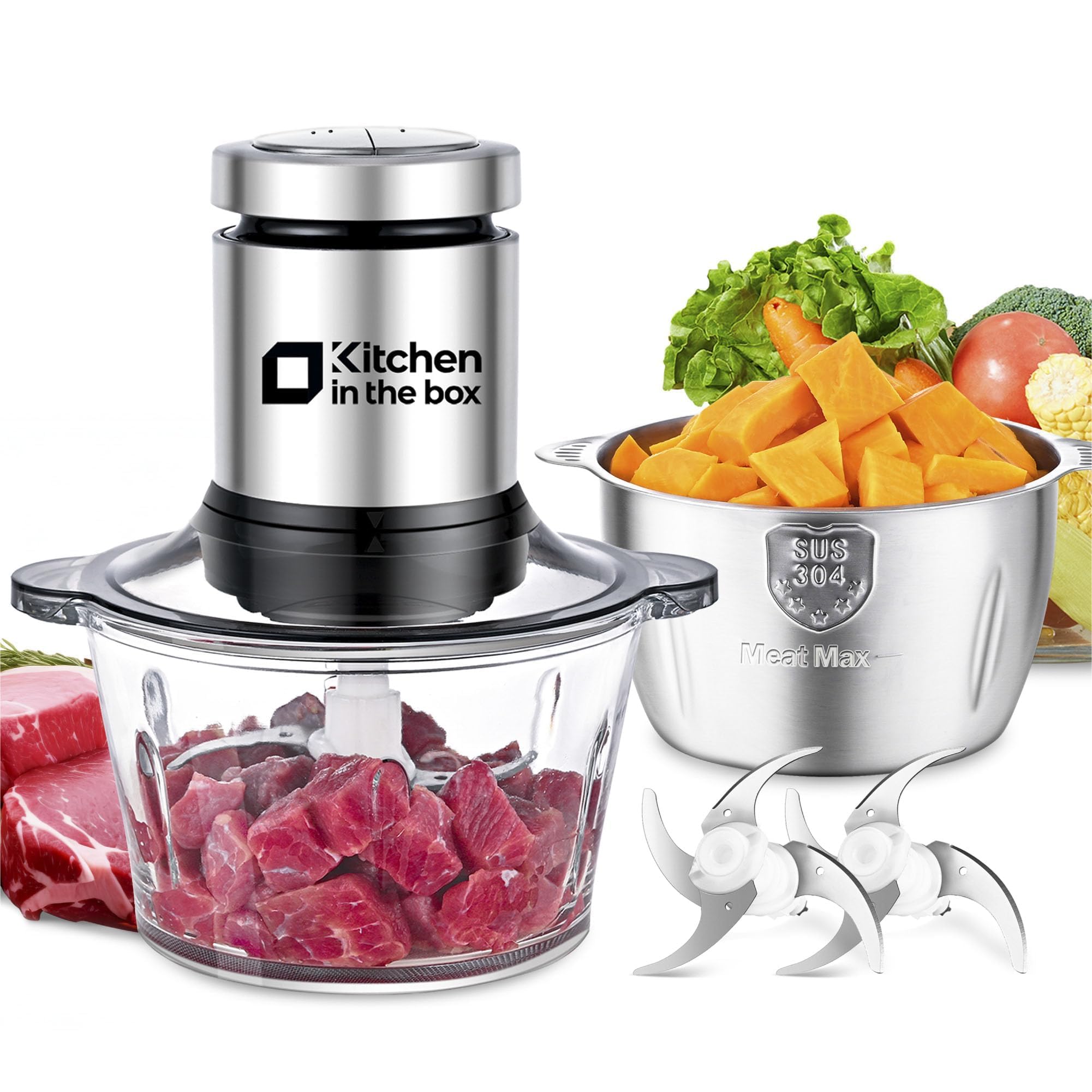
The Kitchen in the box MG01 keeps meat in its own 8-cup 304 stainless steel bowl. A glass 8-cup bowl handles vegetables and fruits, so raw meat residue stays out of your produce bowl. The bowls stack for storage.
Two sets of stainless steel S-blades, a lid and two non-slip mats come in the box. A 400 W full-copper motor drives them, with overheat protection.
Two buttons set the speed. Button I is for vegetables: hold 3 seconds, repeat 3 to 4 cycles. Button II is for meat and tough foods: hold 5 to 6 seconds, repeat 3 to 4 cycles.
Detachable parts are dishwasher safe, while the motor base only wipes clean. It weighs 5.3 lb and is corded electric only, at 120 V.
The main limit is control: only two speeds, so you work in short holds rather than one long run.
It suits households that grind meat often and want a dedicated steel bowl kept apart from produce.
- Brand: Kitchen in the box
- Power: 400 W
- Voltage: 120 V
- Bowl capacity: 8 cups
- Speeds: 2
- Weight: 5.3 lb
Frequently asked questions
Glass bowls, plastic hubs and dishwasher heat are where most buying questions land.
Is there a 100% plastic-free food processor?
No electric model is. The blade has to mount on a hub, and that hub is plastic on every machine, as is the lid. What you can do is shrink the plastic to the smallest parts and keep the big surfaces glass or steel.
Can you use the steel bowl for raw meat and the glass bowl for produce in the same session?
Yes, and that split is the practical reason a dual-bowl set helps. Keep raw meat in the steel bowl and produce in the glass one, and you never have to wash one bowl to make it safe for the other job mid-recipe. Steel also takes heat and acid without complaint, while glass lets you watch texture form, so each bowl suits the work it does best.
What breaks a glass processor bowl?
Drops, thermal shock from hot food hitting a cold bowl, and chips along the rim. Inspect the bowl before each use and stop using it once it is chipped or cracked.
Is BPA-free plastic safe?
BPA-free usually means the maker swapped in another bisphenol or a different plastic. It is still plastic, which is why a glass or steel bowl is the more direct answer.
Where is the plastic in a glass-bowl food processor?
Look at the blade stem first, then the lid underside and its gasket, then the socket under the bowl that takes the drive. Those are the spots to inspect in the photos or ask the seller about, because the bowl and blades are the parts you can get in glass and steel.
Do non-plastic food processors cost more?
What moves the price is the number of bowls, the mix of bowl materials, the blade design and the motor. A dual-bowl glass-and-steel set is the entry point, and all-steel multi-bowl sets sit above it.
What can I do if I already own a plastic food processor?
Use it for short, cold jobs, wash the bowl by hand rather than in the dishwasher, and retire it once the plastic is scratched or clouded. Put cookware and hot-food storage ahead of it on your list.