
Best Food Processor for Grating Cheese 2026: Shredding Discs for Hard and Soft Cheeses
When you buy through the Amazon links on this page, we may earn a commission at no extra cost to you. Learn more
Last updated October 30, 2026
The best food processor for grating cheese is the Hamilton Beach 70730: it ships a stainless steel slicing/shredding disc, its 10-cup bowl takes a whole block of cheddar in one pass, and a built-in bowl scraper lets you work sticky shreds without lifting the lid. What decides the job is not wattage but whether a shredding disc is in the box, since the chopping blade turns cheese into paste instead of strands.
For fine Parmesan and coarse pizza shreds from one plate, the Ninja Professional Plus BN601 carries a reversible disc. Cold cheese and the right disc size turn a smear into clean shreds.
The best food processors for grating cheese in 2026

Hamilton Beach 70730 food processor
See on Amazon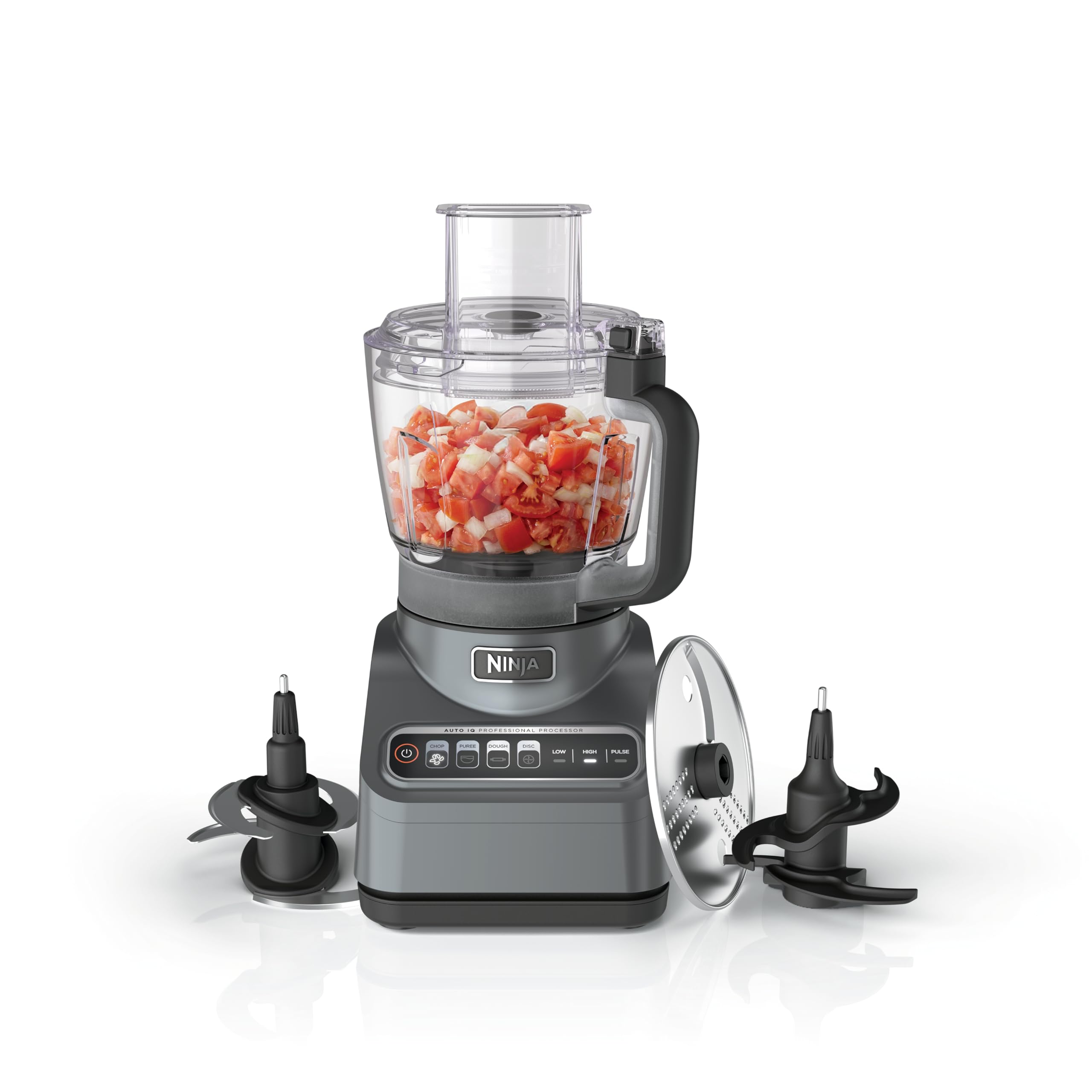
Ninja Professional Plus BN601
See on Amazon
Ninja NF701 Professional XL food processor
See on AmazonModel comparison
| Model | Price | Rating | Voltage | Weight | Bowl capacity | Best for | |
|---|---|---|---|---|---|---|---|
| | Hamilton Beach 70730 food processor | $69.95 as of 10/31 See on Amazon | ★ 4.5 (41,400+ ratings) | 120 V | 6.2 lb | 10 cups | Budget shoppers doing everyday prep get a built-in bowl scraper that wipes the wall on sticky jobs, plus a 10-cup bowl. |
| | Ninja Professional Plus BN601 | $99.99 as of 10/31 See on Amazon | ★ 4.6 (14,400+ ratings) | 120 V | 7.7 lb | 9 cups | Two-to-four-person households wanting one-button chopping get four Auto-IQ programs and a full disc set in a 9-cup bowl. |
| | Ninja NF701 Professional XL food processor | $149.99 as of 10/31 See on Amazon | ★ 4.6 (14,400+ ratings) | 120 V | 12.3 lb | not stated | Cooks shredding blocks of cheddar for big batches get a 12-cup bowl and reversible fine and coarse shredding disc. |
 | Cuisinart Elemental FP-8SV | $128.57 as of 10/31 See on Amazon | ★ 4.6 (9,400+ ratings) | 120 V | 6 lb | 8 cups | Small-kitchen cooks who shred a block of Gouda now and then get medium to fine discs in a 6-pound machine. |
 | KitchenAid KFP0718 food processor | $79.95 as of 10/31 See on Amazon | ★ 4.5 (7,900+ ratings) | 120 V | 6.6 lb | 7 cups | Occasional graters who want the disc always at hand get all-in-one storage and a reversible medium slicing and shredding disc. |
How a shredding disc actually cuts cheese
A shredding disc is a flat plate with punched, raised teeth: the metal is cut and bent upward to form a lip. It mounts high on a stem above the bowl floor and spins with the motor. Cheese comes down the feed tube, meets the raised teeth and is shaved into strips that fall into the bowl. One pass equals one cut, so the shred size is fixed by the disc, not by how hard you push or how fast the motor runs.
The tooth size and the shape of the punched hole set the result. Small teeth and tight holes give fine shreds; larger teeth and wider openings give coarse ones. A reversible disc carries one size on each face, so you flip it over to change from fine to coarse.
Because the cut is a shave rather than a chop, the shred keeps the cheese's structure. That is why home-shredded block cheese melts smoothly. The S-blade cuts in random directions at speed, warms the fat and turns cheese into paste with crumbs in it. The disc's job is also why the feed tube matters: a disc only shreds what reaches it.
Matching disc hole size to hard and soft cheeses
A fine disc suits hard grating cheeses: Parmesan, pecorino, aged Asiago, aged Gouda. It produces a fine crumble that melts into sauces and dusts over pasta. On very hard, dry cheese a fine disc can turn the cheese into dust rather than shreds, and that is the sign to switch to the chopping blade and pulse 1-inch chunks instead.
A medium disc is the all-purpose size: cheddar, Monterey Jack, Gouda, Edam, Swiss, low-moisture mozzarella. This is the size most recipes mean by shredded cheese. A coarse disc suits semi-hard block cheese for pizza and casseroles where you want visible strands. On soft, high-moisture cheese a coarse disc clogs: the cheese smears across the plate and welds into a ball instead of falling away.
Soft and fresh cheeses (fresh water-packed mozzarella, brie, fresh goat, cream cheese) do not shred on any disc at any price. They smear, so slice or knife them instead. Low-moisture mozzarella will shred if it is chilled hard first.
The words are not interchangeable. Grated usually means fine flecks of hard cheese; shredded means larger strands of semisoft block cheese. Most people who say grating mean shredding cheddar for pizza or mac and cheese, and a shredding disc handles both.
Why cold cheese grates cleanly and warm cheese gums up
Cold firms the fat. A fridge-cold block cuts cleanly and the shreds fall away; a room-temperature block smears on the disc and the shreds weld together in the bowl. Chill firm and semi-hard cheese 15 to 30 minutes in the freezer before shredding. Low-moisture mozzarella benefits most, and cheddar, Gouda and Swiss also improve.
Do not go solid-frozen. Fully frozen cheese will not grate: it chips and jams. The target is firm and cold, not hard as a rock. For soft cheese, cut it into cubes and partly freeze it for about 15 to 20 minutes so the outside firms enough to shave. Even then, expect a rougher result than with block cheese.
Parmesan is the exception to the chill rule. It is already dry and hard, so room temperature is fine: cut it into 1-inch cubes and pulse in the chopping blade.
Grating is a high-energy operation, so the base can feel warm to the touch and a slight electrical smell is normal. The motor's thermal cutout resets when it cools. Cleaning the disc between batches cuts friction and heat.
Feeding cheese through the feed tube safely
Cut cheese into pieces that fit the feed tube with a little room: rectangular batons slightly narrower than the tube so the block does not tumble. A tumbling block makes jagged scraps and friction. Use the pusher, never fingers. The pusher keeps hands clear of the spinning disc and applies the steady, moderate pressure that gives an even cut.
Do not overfill. Stop before the shreds reach the bottom of the disc, or they get re-ground. Empty the bowl at about two-thirds. Do not chase the last nub: stop the instant the block clears the disc.
On big batches, clear the underside of the disc every 30 to 60 seconds so packed shreds do not stall the disc or get thrown back up the chute. A wide feed tube means fewer trims, since a block of cheddar goes in with one cut. A narrow tube means more prep.
Disc storage, swapping and cleaning after cheese
Cheese leaves a greasy film. Rinse the disc in cold water first, because hot water melts the fat into a film that is harder to shift, then soak it in warm soapy water and brush along the teeth from the back with a dish brush. Skip the sponge and keep your fingers away from the teeth.
A detachable disc stem lets you reach the cheese that packs under the disc; a fixed stem traps it. Store discs flat in their own holder or slot, not loose in a drawer, so the cutting edges do not get nicked. A nicked tooth tears rather than shaves.
Hand-wash discs to keep them sharp, while the bowl and lid can usually go in the dishwasher. For a fast routine on the bowl, run a drop of dish soap and warm water in it briefly, then rinse. Enclosed bowl handles and lid channels trap cheese, so check them before you put the bowl away.
When a food processor beats a box grater for cheese
The processor wins on volume: a pound of cheddar for a casserole, a big batch of mac and cheese, pizza night for a crowd, a block of mozzarella for a lasagna. A disc does in one pass what a box grater does in several minutes of arm work, and it gives one consistent shred size.
The box grater wins on small jobs and soft cheese: a handful of cheese for a salad, a little Parmesan over pasta, fresh mozzarella, and cleanup, since a box grater rinses in seconds. A box grater also lets you vary pressure to get long, wispy shreds, while a disc gives one size.
If you shred cheese a couple of times a year, a box grater is the right purchase. The processor earns its place when cheese is a regular, bulk job.
There is a reason to bother at all. Bagged pre-shredded cheese is coated with potato starch, powdered cellulose or cornstarch to stop clumping, and that coating is why it melts grainy and will not fully liquefy. Home-shredded block cheese melts smooth, and that is the argument for owning a disc.
Our picks by budget
The Hamilton Beach 70730 is our budget pick because it puts a real shredding disc and a 10-cup bowl, big enough for a block of cheddar, at the entry level, with a bowl scraper for sticky shreds. You give up a second shred size, motor headroom and warranty length.
The Ninja Professional Plus BN601 is our mid-range pick because one reversible disc gives fine and coarse shreds, and the 1000 peak watts plus four Auto-iQ programs take the guesswork out of a batch. The bowl is smaller than the budget pick's and the warranty is still 1 year.
The Ninja NF701 Professional XL is our premium pick because it brings the biggest bowl and feed chute here, two shred sizes and the most motor headroom for hard cheese and big batches. The footprint and the 12.3 lb weight are what you accept for it.
Budget
Mid-range
High-end
Which food processor for which cheese cook
How much cheese you shred at a time, and whether you need fine and coarse sizes, points to a different machine.
The bulk home cook
Pounds of cheddar for casseroles, mac and cheese and pizza night land in the 10-cup bowl in one pass, and the bowl scraper works the sticky shreds without lifting the lid.
The two-size cook
Fine for Parmesan over pasta and coarse for pizza come from one reversible plate, and the preset programs make repeat batches easy.
The big-batch host
A 12-cup bowl, an extra-large feed chute and fine or coarse shredding handle large gatherings, with variable slice settings for the rest of the prep.
The small-kitchen cook
An 8-cup bowl with reversible medium-to-fine shredding and slicing discs, in the lightest and shortest body here, so it fits a tight counter.
The occasional cheese grater
A 7-cup bowl with a reversible medium slicing and shredding disc, and all-in-one storage that keeps the disc in the bowl between uses.
Our verdict on the best food processor for grating cheese
The Hamilton Beach 70730 is the pick for most people who grate cheese in bulk: a real shredding disc, the largest bowl at the entry level and a bowl scraper that suits sticky shreds. The Ninja Professional Plus BN601 is the pick when you want two shred sizes on one disc and preset programs, and the Ninja NF701 Professional XL is the pick for big batches and a wide feed tube.
The disc, not the wattage, is the deciding feature, and the cheese's temperature decides whether the disc produces shreds or paste. Chill the block, feed it through the tube with the pusher, and empty the bowl before it fills.
Detailed model analysis
A food processor only shreds cheese if a shredding disc is in the box, and the disc's hole size, not the motor, sets whether you get fine crumbles or coarse strands.
Hamilton Beach 70730 food processor
The Hamilton Beach 70730 includes a shredding disc, plus a slicing disc and a chopping blade, so you can grate, slice and chop.
The 10-cup bowl holds a big block of cheddar, and the large feed chute means fewer pieces to cut first. Parmesan is among the tough foods its motor is described as handling.
The built-in bowl scraper slides side to side to push shreds off the bowl wall. It works with the motor running or off, and the lid stays on. It helps with soft, sticky cheese.
The motor is rated at 450 watts, above the Cuisinart Elemental FP-8SV at 350 watts and the KitchenAid KFP0718 at 300 watts. It weighs 6.2 lb.
Controls are basic, with only 2 speeds plus pulse. The Ninja Professional Plus BN601 offers four Auto-iQ presets. The 1-year limited warranty is shorter than the 3 years on the Cuisinart Elemental FP-8SV.
It suits budget shoppers who want to grate cheese and handle everyday prep with one machine.
- Brand: Hamilton Beach
- Bowl capacity: 10 cups
- Power: 450 W
- Voltage: 120 V
- Speeds: 2 plus pulse
- Weight: 6.2 lb
Ninja Professional Plus BN601
The Ninja Professional Plus BN601 comes with a reversible slicing and shredding disc, so one disc covers both jobs. A chopping blade and a dough blade are also in the box.
Its 9-cup bowl has a feed chute lid with a pusher, which keeps your hand away from the disc while you push the cheese through.
The motor is a 1000-peak-watt unit. That is a peak figure, so we would not stack it directly against the rated wattage of other models.
It has 4 Auto-iQ preset programs: chopping, slicing, pureeing and dough making. Shredding is not one of the four, so you handle it yourself with the disc and the 3 speeds.
A safety interlock keeps it from running unless it is properly assembled. The removable parts are BPA-free and dishwasher safe.
It suits cooks who also make dough and purees and want a presets-and-disc combination.
- Brand: Ninja
- Peak power: 1000 W
- Bowl capacity: 9 cups
- Voltage: 120 V
- Weight: 7.7 lb
- Dimensions: 7.76 in deep, 9.88 in wide and 16.02 in high
Ninja NF701 Professional XL food processor
The Ninja NF701 Professional XL is built for big blocks and big batches. Its 12-cup bowl and XL feed chute with a 3-part pusher mean you cut a block into fewer chunks before it goes in, which saves prep time.
The reversible shredding disc gives you fine or coarse shreds. Fine suits hard cheeses, and coarse suits pizza or tacos. Variable slice settings run from thick to paper-thin, handy for a cheese platter.
The motor is rated at 1200 peak watts, and a dough blade is included. The bowl, lid, discs and blades are dishwasher safe, and a 1-year limited warranty applies.
Size is the trade-off. It weighs 12.3 lb, so plan on a spot where you can leave it out.
We find it suits households that shred cheese in bulk and have the counter space.
- Brand: Ninja
- Capacity: 12 cups
- Peak power: 1200 W
- Voltage: 120 V
- Preset programs: 4
- Weight: 12.3 lb
Cuisinart Elemental FP-8SV
The Cuisinart Elemental FP-8SV gives you reversible shredding and slicing discs in medium to fine sizes. That range suits hard cheeses and semi-soft ones like Gouda.
The 8-cup work bowl has measurement markings. The integrated feed tube lets you add cheese while the motor runs, so you do not stop to open the lid.
Rubberized touch pads give you High, Low, Off and Pulse controls. The 350-watt motor has less power than the 450 watts on the Hamilton Beach 70730 food processor.
It weighs 6 lb and carries a 3-year limited warranty. The parts are BPA free, and it runs on corded electric power only.
The limit is disc range. Both discs stop at medium to fine, so you get no coarse shred for a thick pile of cheese. It has no scraper and no presets.
We find it suits small-kitchen cooks who grate cheese now and then and want a light machine with a 3-year limited warranty.
- Brand: Cuisinart
- Power: 350 W
- Voltage: 120 V
- Bowl capacity: 8 cups
- Speed settings: 4
- Weight: 6 lb
KitchenAid KFP0718 food processor
The KitchenAid KFP0718 keeps everything in one place. All-in-one storage nests the blades and discs inside the 7-cup work bowl, so nothing gets lost in a drawer. Cord storage keeps the counter tidy.
You get one reversible medium slicing and shredding disc: medium shreds on one side, slices on the other. A multi-purpose blade handles chopping and pureeing.
The 2-in-1 feed tube takes different shapes and sizes, including tomatoes, cucumbers and potatoes. Controls are High, Low and Pulse, set with easy-press paddles and illuminated LED controls.
The snap-and-go bowl assembles with one click and a latched lid. For cleanup, add warm water and one or two drops of dish soap, then run the machine.
The motor is 300 watts, the unit weighs 6.6 lb, and the warranty runs 1 year. The bowl holds 7 cups, so a large block of cheese needs to go in as smaller pieces.
The limit is flexibility: one medium disc, with no fine or coarse option. We find it suits occasional graters who want the disc always at hand.
- Brand: KitchenAid
- Bowl capacity: 7 cups
- Power: 300 W
- Voltage: 120 V
- Speeds: 3
- Weight: 6.6 lb
Frequently asked questions
Most cheese that turns to paste in a processor was either too warm or cut by the wrong blade.
Do I need a special disc to grate cheese in a food processor?
Yes, a shredding disc. The chopping blade cannot make strands: it cuts in every direction at speed, warms the fat and leaves you with paste and crumbs.
Does every food processor come with a shredding disc?
No. Some machines ship only a chopping blade, and mini choppers have no disc and no feed tube at all. Check the box contents before you buy.
What size food processor do I need to grate a pound of cheese?
Shredded cheese is mostly air: a pound of block becomes roughly 4 to 5 cups of shreds. A 10-cup bowl takes a block in one pass, while a 7- or 8-cup bowl means two batches.
How many watts do I need to grate cheese?
Wattage is not the deciding spec; the disc is. 450 watts is a reasonable floor, and more headroom helps with hard cheese and dough.
Can I grate Parmesan in a food processor?
Yes. Use the chopping blade and pulse in short bursts, or run it on a fine disc; either way, stop as soon as the pieces reach a crumble, because very dry Parmesan turns to dust if you keep going.
Is freshly grated cheese better than bagged pre-shredded?
For melting, yes. Bagged shreds carry an anti-caking starch coating that makes them melt grainy, while block cheese you shred yourself liquefies smoothly.