
Best Food Processor for Potatoes 2026: Slicing and Shredding Discs for Fries, Gratins and Hash Browns
When you buy through the Amazon links on this page, we may earn a commission at no extra cost to you. Learn more
Last updated October 30, 2026
The best food processor for potatoes is the KitchenAid KFP1318: its Exact Slice disc changes slicing thickness from outside the bowl, so 0.08 to 0.12 in (2 to 3 mm) for a gratin and thicker slices for a roast come from one attachment, and its reversible shredding disc turns out coarse strands for hash browns and latkes. The Breville BFP810 Sous Chef 16 is the pick if you want fries and whole potatoes, thanks to its french-fry disc and 5.5-inch chute.
One job stays off the list: mashing. A blade shears starch out of cooked potato cells and the mash turns gummy in seconds, with no way back.
The best food processors for potatoes in 2026

KitchenAid KFP1318 food processor
See on Amazon
GE G8P1AASSPSS food processor
See on Amazon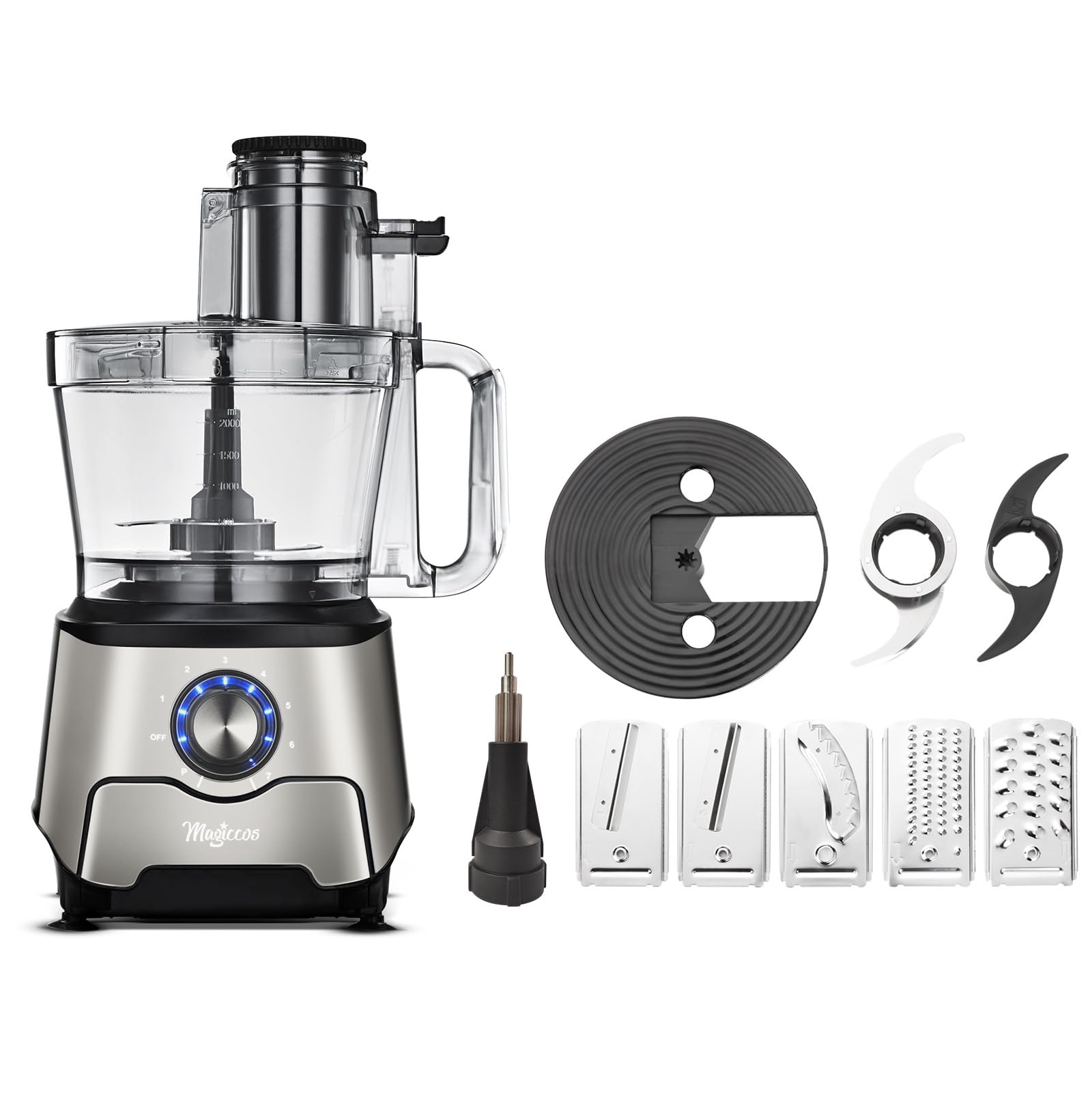
Magiccos FP408 14-Cup food processor Gray
See on AmazonModel comparison
| Model | Price | Rating | Voltage | Speeds | Weight | Best for | |
|---|---|---|---|---|---|---|---|
| | KitchenAid KFP1318 food processor | $179.95 as of 10/31 See on Amazon | ★ 4.4 (1,500+ ratings) | 120 V | 3 | 9.7 lb | Potato cooks who want one disc to switch from thin gratin slices to thick roast slices should pick the externally adjustable Exact Slice disc. |
| | GE G8P1AASSPSS food processor | $149.99 as of 10/31 See on Amazon | ★ 4.4 (800+ ratings) | 110 V | 3 | not stated | Budget buyers who want fries, gratins and hash browns covered out of the box get a french-fry disc plus fine and medium shredding discs. |
| | Magiccos FP408 14-Cup food processor Gray | $169.99 as of 10/31 See on Amazon | ★ 4.3 (800+ ratings) | not stated | 7 plus pulse | not stated | Home cooks who want every potato cut without buying extra discs get five cutting blades, including french-fry, thick and thin slicing. |
 | Hamilton Beach Professional 70815 | $170.94 as of 10/31 See on Amazon | ★ 4.4 (250+ ratings) | 120 V | 2 plus pulse | 8 lb | Anyone who slices a lot wants six thickness settings, spiral and ribbon blades, and a dough blade in one machine. |
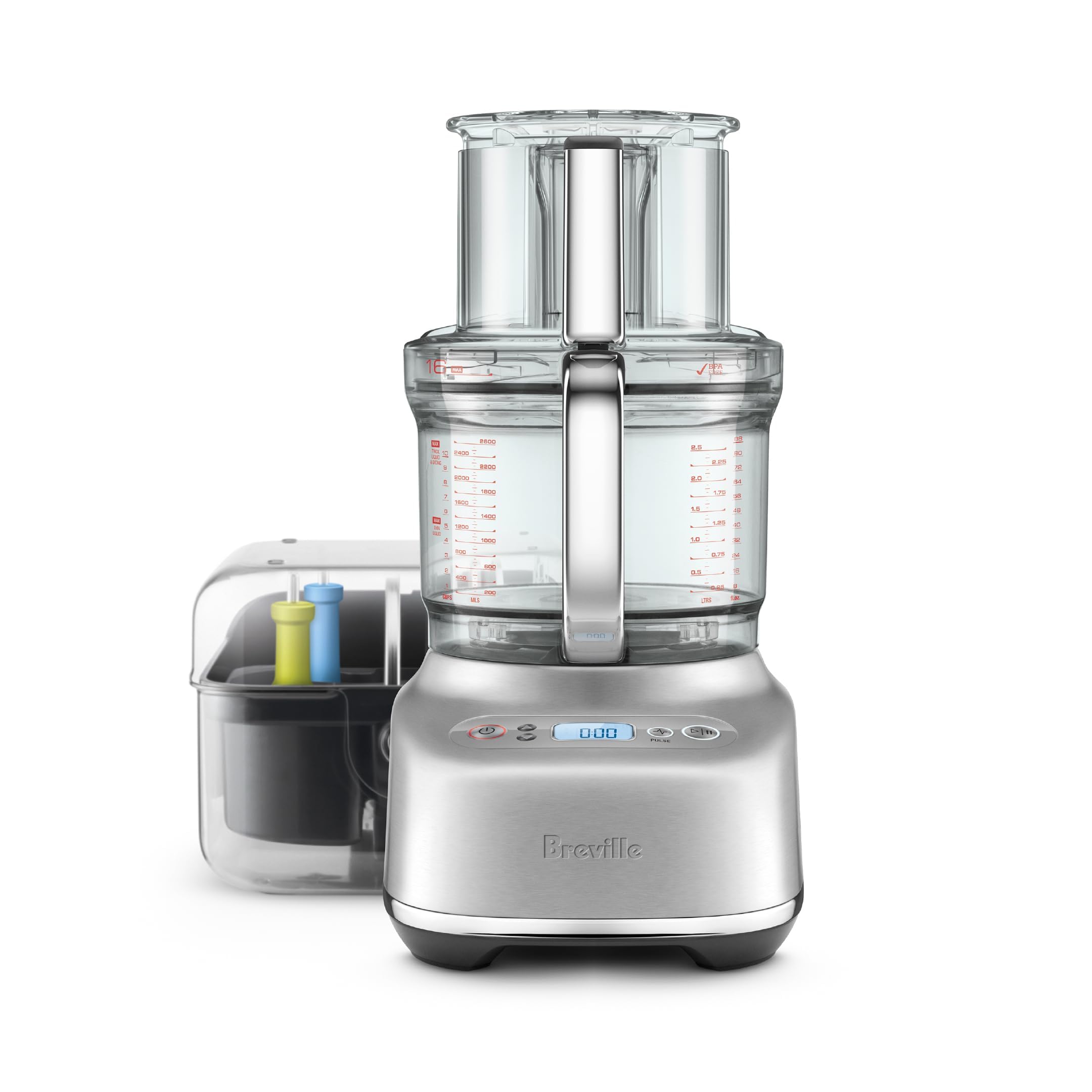 | Breville BFP810 Sous Chef 16 | $499.95 as of 10/31 See on Amazon | ★ 4.6 (150+ ratings) | 120 V | not stated | 30.6 lb | Bakers and batch cooks with counter space get a 1450-watt induction motor, a 16-cup bowl and a 24-size adjustable slicer. |
Why potatoes are hard on a food processor
A raw potato is dense and unyielding. The disc has to be pushed through it rather than gliding through it, and that resistance travels back up the shaft to the motor. Cheese and cucumber give way under the pusher; a russet does not.
Starch is the second problem. Cut potato flesh releases starch and water that coat the disc, pack into the gap between disc and bowl wall, and set into a paste. That paste blunts the next cut and loads the machine. The third problem is pressure: forcing a potato down the feed tube takes far more push than soft foods do, which is what makes a light machine walk across the counter and what overheats a motor on a long run.
The failure you get from a weak machine on potatoes is stalling, shuddering and slow going, not ragged shreds. Ragged shreds come from a dull disc and a wide gap between disc and bowl, which is a design question, not a power question.
Which disc actually makes fries, gratins and hash browns
Each cut has its own attachment, and the thickness of the slice decides the dish as much as the disc type does.
Coarse shredding disc
Long, thick strands with enough surface area to crisp. This is the disc for hash browns, latkes, potato pancakes, rösti and kugel.
Fine shredding disc
A softer, denser shred. It works for kugel and for mixing into doughs, and it is wrong for hash browns because the strands collapse in the pan.
Slicing disc
Gratins, scalloped potatoes, potato chips and Anna potatoes all come off the slicing disc, and thickness is the whole story: roughly 0.04 to 0.08 in (1 to 2 mm) for chips, 0.08 to 0.12 in (2 to 3 mm) for a classic gratin, 0.12 to 0.16 in (3 to 4 mm) for a hearty gratin or roast potatoes, and 0.16 in (4 mm) and up for rustic wedges and long bakes.
Adjustable slicing disc vs fixed disc
An adjustable disc covers chips to thick-cut in one attachment. A fixed disc gives you one thickness, and any other thickness is a separate purchase. Disc labels are not standardized between brands, so the number on the box is a starting point, not a promise.
French-fry disc
The batonnet disc produces actual fries. A slicing disc gives you slabs, not batons.
Dicing kit
Potato salad and soup want a dicing kit, which is usually sold separately, so check what is in the box before you buy.
S-blade
The S-blade is not a potato-cutting tool. It wedges and smashes rather than cuts, which is fine for soup and wrong for anything that needs to look like a slice or a shred.
How to get even, non-mushy shreds from starchy potatoes
Shredding ruptures cells and releases starch and water. Left alone, that starch glues the shreds into a mat and the water steams them instead of frying them.
Start with cold, firm potatoes and feed them with light steady pressure rather than forcing. Rinse the shreds in cold water until the water runs clear, then squeeze them dry in a towel and let them rest under the towel so more water comes out. Dry shreds are the difference between crisp and soggy.
A processor beats a box grater here because it is faster, so less oxidation and less browning, and its strands are more even, so more surface area meets the pan and browns.
For latkes, shred most of the potatoes on the coarse disc for crisp edges and give a portion a short pulse with the S-blade for a softer interior, then combine the two. The starch that settles out of the rinsing water can be stirred back into the mix.
Cutting potatoes down to fit the feed tube
A whole baking potato is longer than most feed tubes are wide, so most machines mean halving or quartering before you start. That is the hidden labor cost of a narrow tube.
The two-tube design solves part of it: a wide tube for whole or halved potatoes and a narrow tube with a pusher for fingers, onions and carrots. The wide tube alone is not enough. A tube that is too wide lets a potato slump and ride at an angle, which produces tapered slices and chunks that spin on top of the disc instead of being cut.
Cut a flat face so the potato sits square against the disc, choose a piece that fills the tube without forcing, and feed one piece at a time, letting each one clear before the next. A tube at the back of the machine means reaching over the top to feed it, which matters when you are processing several pounds.
When a food processor beats a mandoline or box grater for potatoes
The processor wins on volume and on shredding. Pounds of potatoes for latkes or a gratin go through in a fraction of the time, the shreds are more even than a box grater's, and your knuckles stay intact. It also wins on fries, which neither a mandoline nor a grater can do.
The mandoline wins on very thin, very uniform slices, chips and precise 0.04 to 0.08 in (1 to 2 mm) gratin layers, and on small quantities where setup and washing-up outweigh the speed. The box grater wins for one or two potatoes and for anyone who does not want another appliance to wash.
Be honest about the limit: a processor's fixed disc may not go as thin as a mandoline, and a mandoline's blade is the better tool when paper-thin and identical is the point.
Keeping potato starch from gumming up the discs and bowl
Potato starch plus water makes a paste that sets hard, and it sets fastest in the places you can't see: the hub of the disc, the spindle, the seam where the lid meets the bowl, the handle. That paste dulls the next batch's cut and can jam the disc on the spindle.
Rinse the disc and bowl under warm running water the moment you finish, before the starch dries. Use a brush on the disc hub and around the spindle, and give dried starch a short warm soak with a drop of dish soap. Wash the S-blade by hand rather than in the dishwasher, because heat and detergent dull the edge.
A bowl with few crevices and a simple lid seam is easier to keep clean than one with a deep handle cavity.
Our picks by budget
The GE G8P1AASSPSS is the budget pick because its box already holds a french-fry disc, fine and medium shredding and slicing discs and a grating disc, so the disc inventory rather than the wattage decides the potato jobs it can do.
The Hamilton Beach Professional 70815 is the mid-range pick because the 3-inch round chute takes wide potatoes whole and the adjustable slicing blade gives six thickness settings, which is where the money goes for a potato cook.
The Breville BFP810 Sous Chef 16 is the premium pick because a 24-setting slicer, a french-fry disc, a reversible shredder and a 5.5-inch chute cover every potato cut on one machine, backed by an induction motor with a 30-year motor warranty and a 2-year limited product warranty.
Budget
Mid-range
High-end
Which food processor for which potato cook
The right machine follows the cut you make most often, whether that is a coarse shred for latkes or a thin slice for a gratin.
The gratin and chips cook
The Exact Slice disc dials in one thickness without swapping discs, and the reversible shredder covers the cheese on top.
The latke and hash-brown household
The 3-inch round chute takes wide potatoes without pre-cutting, and the adjustable slicing blade plus reversible shredder handle the rest.
The fry maker
It has a dedicated french-fry disc alongside a 24-setting slicer and a chute that takes a whole large potato.
The holiday-batch cook
A 14-cup bowl and five cutting blades cover chips, gratin, hash browns and fries, with a drawer that stores the blades.
The first processor or small kitchen
Slicing, shredding and fries come in one box, with a mini bowl for small jobs and a 16-inch height that fits under most cabinets.
Our verdict on the best food processor for potatoes
The KitchenAid KFP1318 takes the top spot because its externally adjustable Exact Slice disc covers gratin through thick-cut in one attachment and its reversible shredder covers hash browns, in a 13-cup bowl that handles a family batch. Go to the Breville BFP810 Sous Chef 16 if fries and whole potatoes matter most, to the GE G8P1AASSPSS for the best value on discs, and to the Magiccos FP408 for volume. None of them is a mashed-potato machine, and the starch section above explains why.
Detailed model analysis
Potato work lives or dies on two parts: the disc that makes the cut you use most and the feed tube that decides how much pre-cutting you do.
KitchenAid KFP1318 food processor
The KitchenAid KFP1318 stands out because one disc handles most potato jobs. The Exact Slice disc adjusts from outside the bowl, so you go from thin gratin slices to thick roast slices without swapping attachments.
For gratins, set the disc near 0.08 to 0.12 in and feed potatoes through the 3-in-1 feed tube, which takes different shapes and sizes. Hash browns and latkes come from the reversible shredding disc, which turns out coarse strands.
The 13-cup bowl snaps together in one click with no twisting, and a latched lid locks it. A caddy inside stores the blades and discs. You can wash the parts by hand or in the dishwasher.
It weighs 9.7 lb, and the cord stores away too.
It has no french-fry disc, so fries are better served by the Breville BFP810 Sous Chef 16. Its 500-watt motor and 3 speeds also trail the MAGICCOS FP408, which has more speeds plus pulse.
We suggest it if you are a potato cook who wants one disc for thin gratin slices and thick roast slices.
- Brand: KitchenAid
- Capacity: 13 cups
- Power: 500 W
- Voltage: 120 V
- Speeds: 3
- Weight: 9.7 lb
GE G8P1AASSPSS food processor
The GE G8P1AASSPSS covers fries, gratins and hash browns out of the box. A french-fry disc plus fine and medium shredding/slicing discs come included, so you do not need extra attachments.
A large feed tube with 3 openings and stackable inner tubes takes whole or large ingredients, so you pre-cut less. Built-in bowl markings help you measure.
A 550-watt motor offers 3 speeds: high, low and pulse. Suction cup feet hold it in place, cord storage keeps the counter clear, and the bowl and accessories are dishwasher safe.
Nine accessories are included: a dough blade, an emulsifier disc, a mini S-blade, a mini chopping bowl, a spatula and a pouring shield.
Slicing comes only from the fine and medium discs, so there is no adjustable thickness for roast slices. The 12-cup bowl matches the Hamilton Beach Professional 70815, and the machine weighs 10 lb.
It suits budget buyers who want fries, gratins and hash browns without extra purchases.
- Brand: GE
- Capacity: 12 cups
- Motor power: 550 W
- Voltage: 110 V
- Speeds: 3
- Dimensions: 10.3 in deep, 12.2 in wide and 16 in high
Magiccos FP408 14-Cup food processor Gray
The MAGICCOS FP408 includes five cutting blades: thick slicing, thin slicing, coarse shredding, fine shredding and french-fry cutting. Hash browns, gratins, roasts and fries are covered without buying extra discs.
A 1000-watt motor drives 7 speeds plus pulse from a single knob. Speeds 1 to 4 are recommended for slicing, higher ones suit shredding, and the maker recommends speed 7 for french fries.
The bowl holds 14 cups. The wide feed chute takes medium vegetables and cheese blocks without pre-cutting, which saves time on potatoes.
A built-in drawer in the base stores up to 7 blades, so discs do not get lost in a cupboard. A serrated chopper blade and a dough blade are included too.
Slicing blades come in fixed thick and thin, so you cannot fine-tune thickness. Plastic parts go on the top dishwasher rack only, because bottom-rack heat can warp them.
The MAGICCOS FP408 suits home cooks who want every potato cut without extra discs.
- Brand: Magiccos
- Bowl capacity: 14 cups
- Motor power: 1000 W
- Speeds: 7 plus pulse
- Blade material: Stainless steel
- Dimensions: 9.5 in deep, 11.3 in wide and 17.8 in high
Hamilton Beach Professional 70815
The Hamilton Beach Professional 70815 is built for people who slice a lot. Its adjustable blade has 6 thickness settings, from thin for gratins to thicker for roasts.
The 3 in round feed chute fits wide foods like potatoes, so you cut less before slicing. It feeds continuously, which keeps a pile of potatoes moving.
A reversible shredding blade gives coarse or fine shreds. A spiral blade makes veggie noodles, and a ribbon blade makes wide ribbons. An S-blade and a dough blade round out six attachments, with a storage case.
The sealed 12-cup bowl has a pour spout and resists leaks. The stack and snap design needs no twisting, and a metal locking arm holds the lid. Blades, bowl and lid are dishwasher safe. It weighs 8 lb.
The limits are clear. It has no french-fry disc. Its 450-watt motor offers 2 speeds plus pulse, and the 12-cup bowl is the smallest size here, shared with the GE G8P1AASSPSS.
We find it suits anyone who slices often and wants fine control over thickness.
- Brand: Hamilton Beach
- Power: 450 W
- Voltage: 120 V
- Bowl capacity: 12 cups
- Speeds: 2 plus pulse
- Weight: 8 lb
Breville BFP810 Sous Chef 16
We pick the Breville BFP810 Sous Chef 16 for fries and whole potatoes. It includes a french-fry disc and a reversible shredding disc for hash browns. It suits bakers and batch cooks with counter space.
The 5.5 in feed chute means you cut and trim less. The 3-in-1 chute runs from 1.7 in to 5.5 in, so smaller openings keep narrow potatoes steady.
The adjustable slicer offers 24 sizes, which gives you more thickness choices than the Hamilton Beach Professional 70815 with its 6 settings.
The bowl holds 16 cups. A heavy-duty induction motor with direct drive puts out 1450 watts, so big batches keep moving. The motor carries a 30-year warranty.
A mini bowl, mini blade, micro-serrated S-blade and dough blade are included. A storage container holds the attachments and cleaning utensils. The bowl is BPA free and dishwasher safe.
It runs at a single speed, so you cannot slow it down for delicate work, unlike the MAGICCOS FP408 with 7 speeds plus pulse. It also needs a fair amount of counter space.
- Brand: Breville
- Bowl capacity: 16 cups
- Motor power: 1450 W
- Voltage: 120 V
- Weight: 30.6 lb
- Dimensions: 9.2 in deep, 11.3 in wide and 17.7 in high
Frequently asked questions
Raw potato is the easy part for a food processor; cooked potato is where the machine turns against you.
Can you put raw potatoes in a food processor?
Yes, and raw is exactly what the discs are built for. Shredding and slicing discs cut raw potato cleanly. It is cooked potato that causes trouble, because the blade shears the starch out of the cells.
Can you make hash browns and latkes in a food processor?
Yes. Use the coarse shredding disc, cold firm potatoes and light pressure, then rinse the shreds until the water runs clear and squeeze them dry before they hit the pan.
How thin should I slice potatoes for a gratin?
Aim for slices thin enough to cook through in the cream yet thick enough to keep their layers, and check the first few slices: if they flop when lifted, go thicker; if they crack when bent, go thinner. A mandoline still beats any fixed disc when paper-thin and identical layers are the point.
Can I make french fries in a food processor?
Only with a dedicated french-fry disc, because a slicing disc gives you slabs rather than batons.
Do I need a special blade to shred potatoes?
The coarse side of a reversible shredding disc. A fine shredding disc works but gives a denser, softer shred that suits kugel better than hash browns.
What wattage do I need for potatoes?
Wattage is a weak guide. Raw potato is dense but not the hardest load a processor meets, and a modest motor shreds potatoes fine. A 450-watt machine handles a family batch of shreds, and anything from 500 watts up will not struggle; the practical limit is how long you run it without a pause, so give the motor a rest between pounds of potatoes.