
Best Food Processor for Nuts 2026: From Chopped Walnuts to Smooth Nut Butter
When you buy through the Amazon links on this page, we may earn a commission at no extra cost to you. Learn more
Last updated October 30, 2026
The Cuisinart Mini-Prep Plus DLC-2ABC food processor is the best food processor for nuts for most home cooks, because its 3-cup bowl keeps a handful of walnuts or almonds under the blade instead of flinging them to the walls, and its auto-reversing SmartPower blade chops on one edge and grinds on the other. If you make nut butter by the jar, the LINKChef FC7048 food processor and its 10-cup bowl suit that job better.
Where you stop matters as much as the machine you buy: the same batch of nuts passes through chop, meal and butter in one continuous run.
The best food processors for nuts in 2026
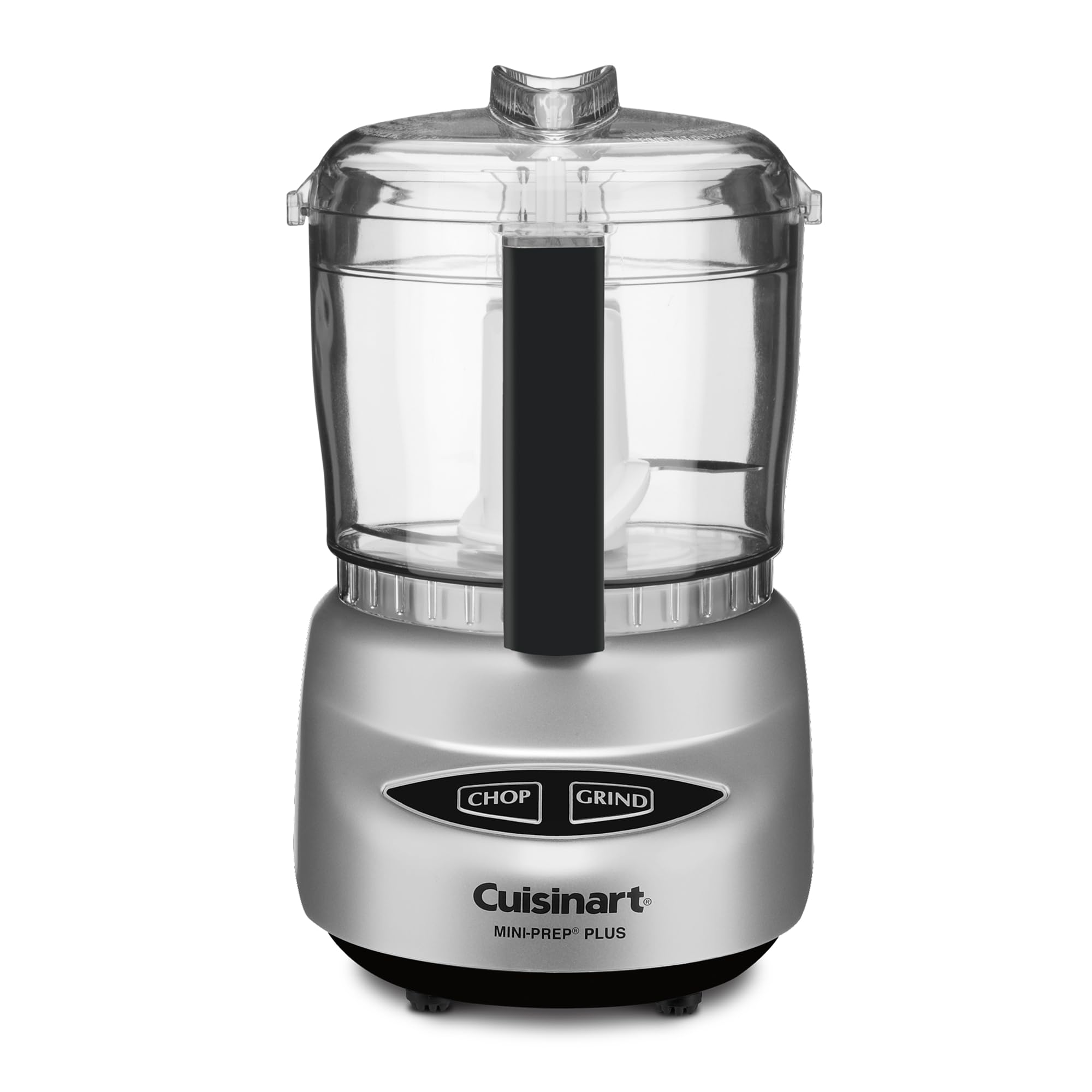
Cuisinart Mini-Prep Plus DLC-2ABC food processor
See on Amazon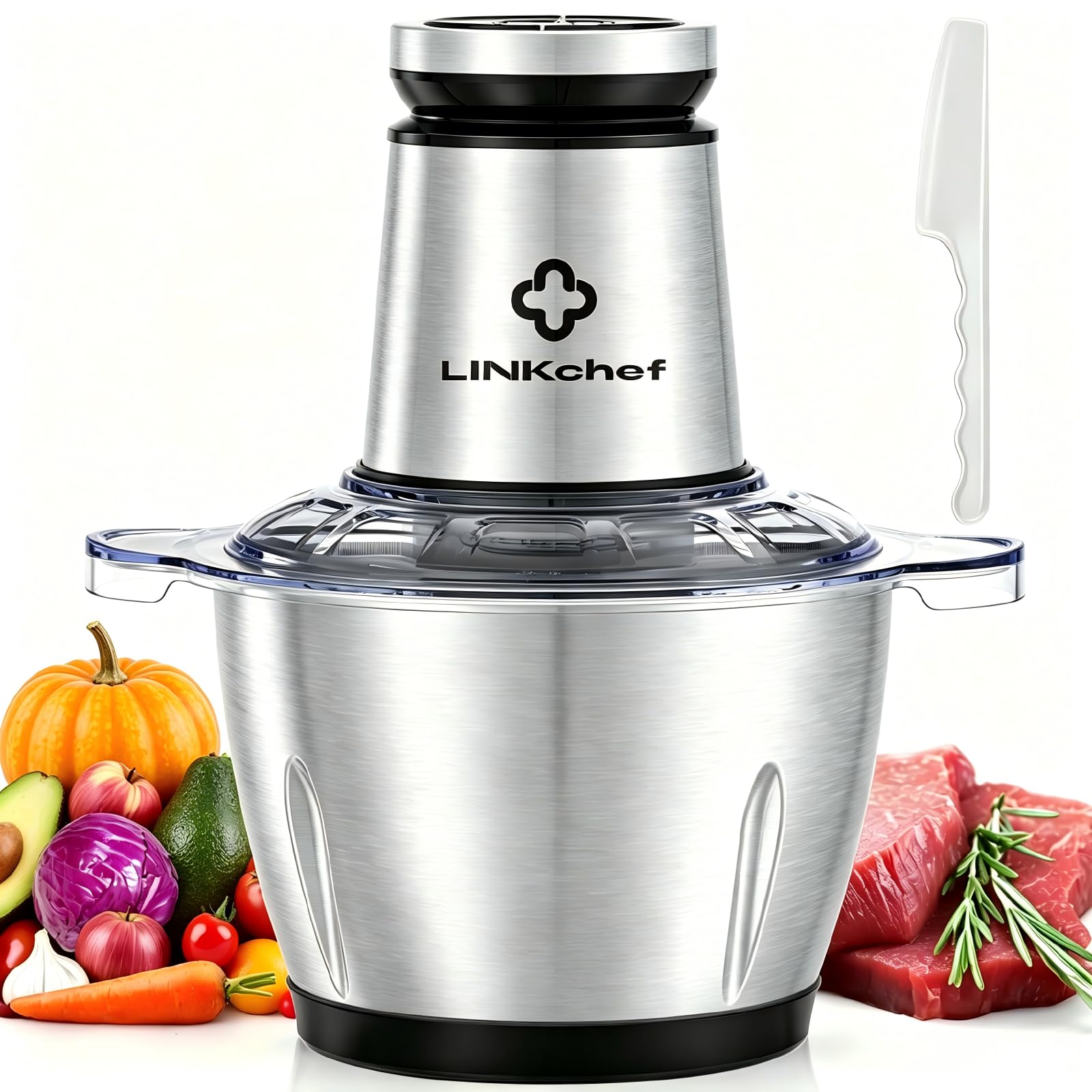
LINKChef FC7048 food processor
See on Amazon
Koios AMJ-301 food processor
See on AmazonModel comparison
| Model | Price | Rating | Power | Weight | Voltage | Best for | |
|---|---|---|---|---|---|---|---|
| | Cuisinart Mini-Prep Plus DLC-2ABC food processor | $39.95 as of 10/31 See on Amazon | ★ 4.5 (25,300+ ratings) | 250 W | 2.2 lb | 120 V | Cooks who already own a big machine or only prep garnishes and small pastes get a 3-cup bowl and a reversible SmartPower blade. |
| | LINKChef FC7048 food processor | $59.99 as of 10/31 See on Amazon | ★ 4.6 (4,700+ ratings) | 600 W | not stated | 120 V | Cooks wanting a compact steel-bowl machine for meat and nuts, with a 2.3L stainless bowl and two speeds. |
| | Koios AMJ-301 food processor | $30.99 as of 10/31 See on Amazon | ★ 4.6 (1,600+ ratings) | 500 W | 4.5 lb | not stated | Cook who wants the most muscle in glass and written rules gets 500 watts and clear limits. |
 | Ninja Foodi SS401 power blender & processor | $259.95 as of 10/31 See on Amazon | ★ 4.6 (4,000+ ratings) | not stated | 12.1 lb | 120 V | Small-batch nut butter makers who want preset programs get an 18-oz smoothie bowl maker with built-in tamper and Auto-iQ spreads settings. |
 | Cuisinart Mini-Prep Plus DLC-4CHB food processor | $64.93 as of 10/31 See on Amazon | ★ 4.4 (5,500+ ratings) | 250 W | 0.9 kg | not stated | Single-can hummus makers with limited counter space who want a compact 4-cup bowl and two processing modes. |
Why nuts are hard on a food processor
Nuts are oily and brittle at once. The blade's first hits shatter them into crumbs, and continued cutting releases oil from the cell walls. The crumbs then bind into a paste, the paste stiffens into a ball that climbs the bowl wall, and the ball finally loosens into a glossy, pourable butter. The same batch passes through every one of those stages in a single continuous run, so your job is to know which stage matches the result you want and to stop there.
- Coarse chop: a few short pulses, with the pieces still distinct.
- Fine chop or meal: more pulses, a sandy texture, no visible oil.
- Paste: the mixture starts to clump and smear the bowl.
- Butter: the oils are fully released, glossy and pourable.
The failure mode is friction heat. Continuous running warms the nuts, and warm nuts release oil faster, which is why short bursts keep the temperature down and widen the gap between chopped and pasted.
Hard nuts and soft nuts behave differently
Almonds, hazelnuts, Brazil nuts and cashews resist the blade and need more pulses. Walnuts, pecans, macadamias and pistachios are soft and oily, reach paste in very few pulses, and are the ones most often over-processed.
Why some nuts stay uncut under the blade
Small, light pieces such as pine nuts, nut dust and crushed almonds fall below a high-set blade and never get cut. That is why some machines leave a layer of uncut nuts under the blade while the top is already powder. A blade that sits low in a flat-bottomed bowl catches them. Serrated blades tear nuts roughly and unevenly instead of cutting them cleanly.
How to chop nuts without turning them into paste
Pulse, never run. Short bursts of a second or two, with a pause between, let the pieces fall back under the blade and keep the temperature down. Chilling or freezing the nuts for a short while before chopping makes them firmer and less willing to release oil, which widens the window between chopped and pasted. Let frozen nuts stand a few minutes so they are cold but not rock-hard, which would strain the motor.
The flour trick that does the most work
Add a little flour or sugar from the recipe, roughly a tablespoon or two per cup of nuts, so the powder coats the cut surfaces and absorbs oil as it appears. This is the single most effective trick for an even fine chop or a nut meal without pasting, and it works because the recipe already calls for the flour or sugar.
Keep the batch moving under the blade
Scrape down the bowl between pulses so the pieces at the top and the powder at the bottom are redistributed under the blade. Work in small batches, a third of the bowl at most, so the blade meets resistance and the nuts keep moving instead of being flung to the sides. Keep the bowl and blade dry and at room temperature; a bowl still warm from the dishwasher or wet from rinsing encourages clumping.
Rescuing a batch that starts to clump
A teaspoon of flour or cornstarch can pull a clumping batch back to a crumb. If it has already formed a mass, the batch is on its way to butter and is better finished as butter than rescued as chop. Sieve out the fine dust at the end if the recipe wants uniform pieces, and keep the dust for coatings or yogurt. A cup of whole nuts gives roughly half to two-thirds of a cup once ground, so plan quantities accordingly.
Getting smooth nut butter from a home processor
Roast the nuts first, then cool them. Toasting for about ten to twelve minutes at around 350°F and letting them cool for a few minutes before processing deepens the flavor and makes the nuts release their oil more readily. This one step does more for the result than any machine upgrade.
Process far longer than feels right
Nut butter is minutes of continuous grinding, not seconds. The mixture goes through a long, unpromising dry sandy meal phase and then a stiff ball climbing the bowl phase before the oils release and it turns glossy. Most people quit at the ball stage, one or two minutes before success. Scrape the bowl every minute or so, pushing the mixture back down into the blade's path.
Add oil only when the mixture truly stalls
Wait until it has been a dry ball for several minutes and shows no sign of loosening. Nuts carry enough oil of their own, and adding oil early delays the point where the nut's own oil releases. A neutral oil or a little melted coconut oil is enough, a spoonful at a time. Salt and sweeten at the end, once the butter is smooth, so the seasoning is evenly distributed.
Batch size and motor care
Too small a batch never builds enough mass to circulate under the blade and stays a ball; too large a batch overloads the motor. A middle range, enough to fill the bowl about a third to half, lets the paste keep moving. Run two to three minutes, then rest and scrape. A machine that stops mid-batch has usually hit its thermal cut-out: it is protecting itself, not failing, and needs to cool before it restarts. Homemade nut butter separates, so stir before use and keep it in the fridge for longer life.
Which nuts and seeds behave differently
Almonds are hard and dense, need the most pulses for chopping and the longest run for butter. Blanched almonds give a cleaner, paler meal than skin-on, which adds flecks and a slight bitterness. Walnuts and pecans are soft and very oily, reach paste in a handful of pulses, so chop them in the shortest bursts and watch closely; they are the best candidates for the chill-first trick.
Hard nuts and creamy nuts
Cashews are hard but creamy once broken down, turn to a smooth paste relatively quickly and are forgiving for butter. Peanuts release oil steadily and make a reliable first nut butter for a new machine, provided you roast them well. Hazelnuts are hard and their skins are bitter, so toast and rub the skins off before grinding for a sweeter result. Brazil nuts are the hardest of the common nuts: chop them in small batches and expect uneven pieces unless you pulse patiently.
Soft nuts and small seeds
Pistachios and macadamias are soft and oily, so treat them like walnuts with very short bursts. Small seeds such as sesame, sunflower and pumpkin are light and fine, fall below a high blade and need a low-set blade and a small batch; they paste quickly once they start to break down. Roasted nuts are more brittle and process faster than raw ones, and are also more prone to turning to dust, so shorten the pulses.
Batch size and bowl load for nut work
Overfilling stalls the blade. Nuts packed above the blade's reach stop moving, the blade spins in a pocket, and the motor labors without cutting anything. Underfilling lets nuts fly: a handful of nuts in a large bowl is thrown to the walls by the blade's draft and never comes back under it, the classic why-is-nothing-happening moment. That is why a small machine can outperform a large one on a small nut job.
The working range
Fill the bowl no more than about a third full for chopping, and keep enough volume for the paste to circulate when making butter. A bowl that is too large for the batch is as much a problem as one that is too small. Match the machine to the job scale: a compact bowl suits a handful of walnuts for a salad or a topping, a full-size bowl suits a jar of nut butter or a batch of almond meal for baking. Pick the bowl size for the nut work you actually do most often, not for the largest job you might attempt once.
Rest between batches
Nut work is heavy. Letting the machine cool between batches protects the motor, and a machine that has cut out needs to cool fully before it will run again.
Our picks by budget
The Koios AMJ-301 is our budget pick because two 8-cup bowls and two blade sets let you dedicate one bowl to nut work and keep the other for savory prep, at the lowest price of the machines here.
The LINKChef FC7048 is our mid-range pick because its 10-cup stainless bowl and low/high speed split map onto chop versus grind, with overheating protection for long butter runs.
The Ninja Foodi SS401 is our premium pick because the built-in tamper pushes nut paste back into the blades without stopping, which is the exact problem that stalls a conventional processor at the ball stage.
Budget
Mid-range
High-end
Which food processor for which nut job
Nut work splits into small jobs that need a small bowl and big jobs that need room for the paste to circulate, and the right machine follows from which one you do most.
The small-batch chopper
A handful of walnuts for a salad, a topping, a pesto or a small batch of nut meal stays under the blade in a 3-cup bowl, and the reversible blade chops on one edge and grinds on the other.
The slightly larger mini
The same small-machine logic and auto-reversing blade with a 4-cup bowl, for the cook who wants a little more room for nut meal without moving to a full-size machine.
The two-bowl all-rounder on a budget
Two 8-cup bowls, one glass and one stainless, with two blade sets and two speeds let you chop and grind nuts alongside everyday prep and keep sweet and savory apart.
The full-size nut-work machine
A 10-cup stainless bowl, 600 watts, low speed for chopping and high for smooth blending, plus overheating protection for the long butter runs.
The one-machine kitchen
The built-in tamper and the preset spread and chopping programs make nut butter and chopped nuts one-touch jobs, alongside smoothies, slicing, shredding and dough.
Our verdict on the best food processor for nuts
The right machine depends on whether you mostly chop, grind to meal or make butter, and on batch size. For chopping and grinding nuts in normal home quantities, the Cuisinart Mini-Prep Plus DLC-2ABC food processor wins: its 3-cup bowl keeps a small batch under the blade, and its auto-reversing blade chops on one edge and grinds on the other. If nut butter is your priority, the LINKChef FC7048 food processor gives you a 10-cup bowl, a low/high speed split and overheating protection for the long runs. If your nut jobs are always small, the Cuisinart Mini-Prep Plus DLC-4CHB food processor adds a cup of room. The Koios AMJ-301 food processor is the value choice, with two bowls to keep nut work separate. Whichever you buy, pulsing, chilling and a little flour do more for the result than the machine alone.
Detailed model analysis
A food processor earns its place for nuts when the blade sits low enough to catch the small pieces and the bowl is sized to the batch you actually make.
Cuisinart Mini-Prep Plus DLC-2ABC food processor
The 3-cup bowl holds 24 oz, small enough to keep a handful of walnuts or almonds close to the blade.
The reversible blade does two jobs. Press chop and the sharp edge cuts nuts into coarse pieces. Press grind and the blunt edge makes a finer meal.
A 250 W motor runs on 120 V with push-button chop and grind. Two small receptacles in the lid let you stream oil into the bowl while it runs, handy for pesto or dressing.
The bowl and lid go in the dishwasher. The stainless steel blade needs a hand wash, and the motor base wipes clean with a damp cloth.
It weighs 2.2 lb and has a plastic body, so it tucks into a cabinet. An 18-month limited warranty covers defects, and a spatula and recipe book come in the box.
A big batch means several rounds, and the single speed gives no finer control. It suits home cooks who chop nuts in small batches.
- Brand: Cuisinart
- Power: 250 W
- Voltage: 120 V
- Bowl capacity: 24 oz
- Weight: 2.2 lb
- Dimensions: 5 in deep, 7 in wide and 9.25 in high
LINKChef FC7048 food processor
The Linkchef FC7048 has the largest single bowl here, at 10 cups (2.3 L). You can work through a big batch of nuts without stopping to empty it.
Two speeds: low for coarse chopping, so walnuts stay in chunks, and high for smooth blending. A 600 W motor drives the stainless steel blade through nuts, meat, vegetables, sauces and ice.
The stainless steel bowl is dishwasher safe. The box adds a lid, a chopping blade, an S blade, a scraper and four blade protectors.
Overheating protection stops the motor on its own. A safety lock keeps the blades from running unless the unit is put together correctly, and an anti-slip base keeps it steady.
The main limit is two speeds and no pulse control, so you judge texture by eye. It suits cooks who process nuts by the jar and want a steel bowl.
- Brand: Linkchef
- Power: 600 W
- Bowl capacity: 10 cups
- Voltage: 120 V
- Speeds: 2
- Dimensions: 7.28 in deep, 9.06 in wide and 10.24 in high
Koios AMJ-301 food processor
The Koios AMJ-301 comes with two bowls, one stainless steel and one glass, each holding 8 cups. You can chop nuts in one and another ingredient in the other without mixing flavors.
A 500 W copper motor spins two sets of S-shaped bi-level blades. Two speeds plus a pulse function let you tap for coarse nut pieces or hold for a finer chop.
Rubber rings under the bowls hold them in place and dampen noise. The bowls stack for storage, and the blades are reversible.
Each run must stay under 30 seconds, followed by a 20 second rest. After an overheat shutdown, unplug it and wait 20 minutes. If the blades do not turn, cut the amount and process again.
Bowls and blades are dishwasher safe, with water no hotter than 140°F to avoid warped lids or bowls. Only one lid comes for the two bowls. It weighs 4.5 lb.
A hidden switch lets the motor run only when the power pod sits properly, and it shuts off if it overheats. It suits cooks who want strong power and clear rules for chopping nuts in short bursts.
- Brand: Koios
- Power: 500 W
- Bowl capacity: 8 cups each
- Speed settings: 2
- Weight: 4.5 lb
- Dimensions: 8.66 in deep, 7.48 in wide and 10.37 in high
Ninja Foodi SS401 power blender & processor
The Ninja Foodi SS401 is built around a 1,200 W rated motor and comes with three containers, making it a blender and processor in one system.
For nut butter, the 18 oz XL Smoothie Bowl Maker matters most. Its built-in tamper pushes nuts and seeds into smooth nut butters using less liquid, and an Auto-iQ spreads program runs it with one touch.
Seven programs cover smoothies, extractions, bowls, spreads, chopping, food processing and dough. Hybrid Edge blades break down nuts, seeds, ice and frozen fruit, while smartTORQUE is built to keep the motor from stalling.
Food processor work is covered too. A lid with a feed chute and discs slices, shreds and grates, and a chopping blade assembly handles chopping. A 72 oz pitcher and a 24 oz cup add room.
Containers, lids, discs and blade assemblies are dishwasher safe, and a 1 year limited warranty applies.
The limits are size and focus. It weighs 12.1 lb, and the nut butter bowl holds just 18 oz, so a big jar means several batches. It suits small-batch nut butter makers who want presets.
- Brand: Ninja
- Pitcher capacity: 72 oz
- Peak motor power: 1600 W
- Voltage: 120 V
- Weight: 12.1 lb
- Dimensions: 8.7 in deep, 8.3 in wide and 16.14 in high
Cuisinart Mini-Prep Plus DLC-4CHB food processor
The Cuisinart Mini-Prep Plus DLC-4CHB has a 4-cup work bowl with a handle. That is more room than the 3-cup bowl of the Cuisinart Mini-Prep Plus DLC-2ABC food processor.
Its auto-reversing SmartPower stainless steel blade switches between chop and grind, chosen with a push-button panel. It grinds nuts and minces garlic.
The motor is rated 250 W. It runs on 220 V, so it needs a matching 220 V supply.
The bowl and lid are dishwasher safe, and the motor base wipes clean with a damp cloth or sponge. Food-contact parts are BPA-free. It weighs about 2 lb (0.9 kg).
It comes with a spatula, an instruction and recipe book, and an 18-month limited warranty.
Limits: only two modes, and the 4-cup bowl is small for a big batch. It suits cooks on 220 V power who grind nuts in small batches.
- Brand: Cuisinart
- Power: 250 W
- Capacity: 4 cups
- Weight: 0.9 kg
- Dimensions: 9 in deep, 11 in wide and 6 in high
- Blade: Auto-reversing stainless steel
Frequently asked questions
Most nut failures in a food processor come down to heat and batch size, and both are fixable without buying anything.
Can a mini food processor chop nuts, or do I need a full-size one?
A mini handles nuts well, and for small quantities it often does better, because a small bowl keeps the pieces under the blade. A full-size bowl wins for large batches and for nut butter, where the paste needs room to circulate.
Why did my nuts turn to paste when I only wanted them chopped?
Continuous running warms the nuts and releases their oil. Pulse in short bursts, chill the nuts first, and add a tablespoon or two of flour or sugar from the recipe per cup of nuts.
How do I grind nuts into flour without making nut butter?
Aim for a texture like fine sand with no visible sheen, and stop the moment the powder starts to clump, since clumping means the oils have begun to release. Measure the nuts before you start, since grinding shrinks the volume, and keep the batch small enough that the powder stays under the blade.
How long does nut butter take in a food processor?
Several minutes of continuous grinding, through a dry meal phase and a stiff ball phase before the oils release. Scrape often and add oil only if the mixture truly stalls.
Should I roast nuts before making nut butter?
Yes. Toast them until fragrant and a shade darker, then let them cool completely, because warm nuts release oil faster and turn to paste sooner. Roasted nuts are also more brittle, so shorten each pulse compared with raw nuts.
Why do my nuts stay whole at the bottom of the bowl while the top turns to powder?
Light, fine material drops out of the blade's reach in a tall bowl, so the top grinds down while a layer underneath is never touched. A flat-bottomed bowl with the blade mounted close to the floor keeps the whole load in the cutting zone. Scraping down between pulses also brings the untouched layer back up where the blade can reach it.
How full should the bowl be for nut work?
For butter, aim for a third to half of the bowl: below that the mass never builds enough to move, and above it the motor labors. For chopping, keep the load light enough that the pieces stay in the blade's path rather than being thrown to the sides.