
Best Food Processor for Kneading Dough 2026: Motors That Handle Bread Dough Without Stalling
When you buy through the Amazon links on this page, we may earn a commission at no extra cost to you. Learn more
Last updated October 30, 2026
The best food processor for kneading dough is the Ninja Professional Plus BN601: it includes a dough blade, runs four Auto-iQ presets and keeps a 9-cup bowl, so small batches of pizza or sandwich dough come together without a stand mixer. For regular, larger batches, the Breville BFP810 Sous Chef 16 pairs a heavy-duty induction motor with a 30.6 lb base that stays put while the dough ball forms.
The best food processors for kneading dough in 2026
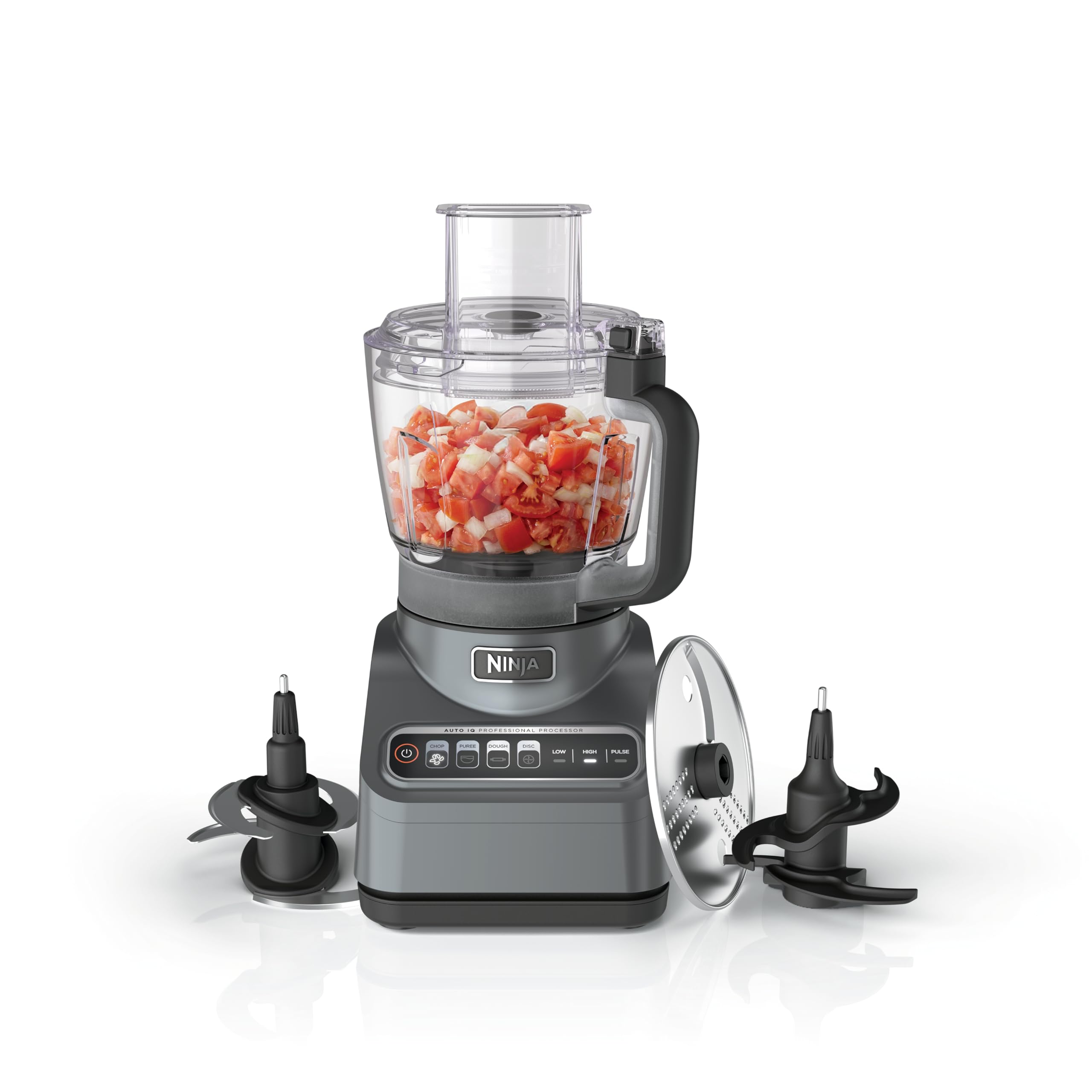
Ninja Professional Plus BN601
See on Amazon
Cuisinart Custom 14 DFP-14BCNY food processor
See on Amazon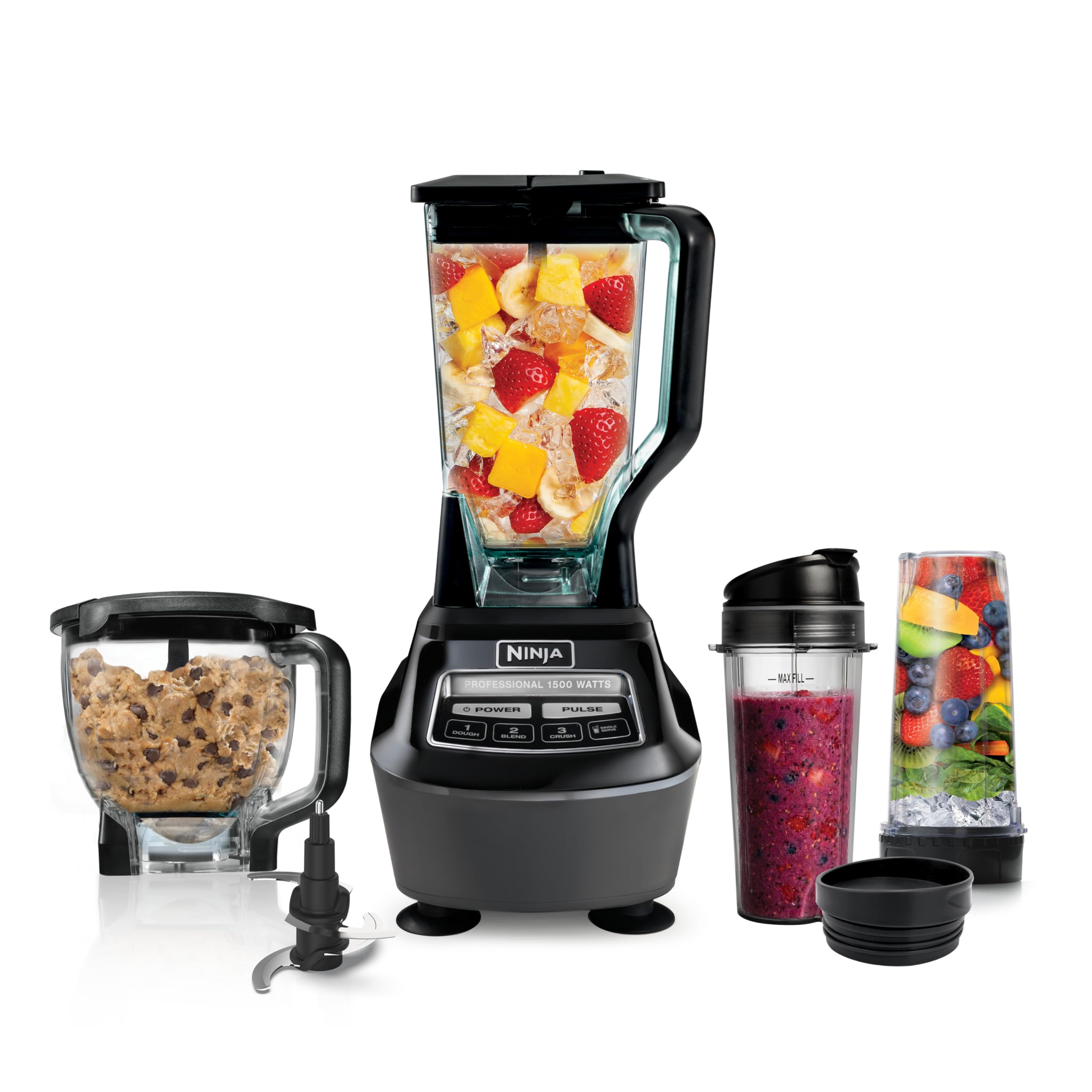
Ninja Mega Kitchen System BL770
See on AmazonModel comparison
| Model | Price | Rating | Weight | Voltage | Best for | |
|---|---|---|---|---|---|---|
| | Ninja Professional Plus BN601 | $99.99 as of 10/31 See on Amazon | ★ 4.6 (14,400+ ratings) | 7.7 lb | 120 V | Two-to-four-person households wanting one-button chopping get four Auto-IQ programs and a full disc set in a 9-cup bowl. |
| | Cuisinart Custom 14 DFP-14BCNY food processor | $249.99 as of 10/31 See on Amazon | ★ 4.5 (15,300+ ratings) | 18 lb | 120 V | Family cooks who work from scratch get a 14-cup bowl, two-button control and a 5-year motor warranty in a planted 18-pound base. |
| | Ninja Mega Kitchen System BL770 | $179.99 as of 10/31 See on Amazon | ★ 4.7 (43,200+ ratings) | 9.2 lb | not stated | One-appliance households short on counter space get an 8-cup bowl plus a 72-oz pitcher and two 16-oz cups. |
 | Ninja NF701 Professional XL food processor | $149.99 as of 10/31 See on Amazon | ★ 4.6 (14,400+ ratings) | 12.3 lb | 120 V | Cooks shredding blocks of cheddar for big batches get a 12-cup bowl and reversible fine and coarse shredding disc. |
 | Breville BFP810 Sous Chef 16 | $499.95 as of 10/31 See on Amazon | ★ 4.6 (150+ ratings) | 30.6 lb | 120 V | Bakers and batch cooks with counter space get a 1450-watt induction motor, a 16-cup bowl and a 24-size adjustable slicer. |
Why dough is the hardest job a food processor motor faces
A stiff bread dough is a dense, cohesive mass that resists the blade far more than chopped vegetables, nuts or cake batter. The motor is turning a heavy load that keeps re-forming around the blade instead of breaking apart, and that sustained resistance is what separates a dough-capable machine from one that only looks powerful on the box.
Dough work is done in short bursts, not a long continuous run. The motor and gearbox heat up under load, and most machines have a thermal cutout that stops the motor to protect it. When the cutout trips, the batch stops: the machine is not broken, but the bake is interrupted. A dough-capable processor is one designed to run briefly under high resistance and rest, not one built for long low-resistance runs.
How to tell whether a motor will stall on bread dough
Wattage is a starting point, not the answer. A high number on its own does not guarantee dough capability; what matters is whether the motor holds its speed under load, which is torque. A peak watt figure describes a short burst, not sustained dough work, so read it as a ceiling rather than a promise.
Motor and drive design tell you more. Direct-drive and heavy-duty induction motors hold speed under load, run cooler and quieter, and are the design associated with machines that knead dough without complaint. Belt drives and plastic gear trains are the parts that strip or slip under dough load.
Overload protection matters too. A machine with a thermal cutout will stop rather than destroy itself, which is useful, but it also means the batch pauses. A machine with no protection and a weak motor is the one that smokes.
Mass and feet keep the machine planted. A heavy base and suction feet stop a light machine from hopping and walking when the dough ball forms and thumps against the bowl. The clearest signal of all is a stated dough rating: a machine whose maker publishes a dough limit is telling you it was designed for the job.
Dough capacity versus bowl capacity
The bowl's cup rating is a volume figure for chopping and liquids. The amount of flour a machine can knead is much lower, because dough needs room to form a ball and clear the bowl walls. Dough should fill roughly half the bowl or less, not the max-fill line.
A 10 to 12 cup machine typically handles about 2 to 3 cups of flour, or roughly 1½ lb of dough, which is about one loaf. A 14-cup machine with a published dough rating can go higher: manufacturer figures for 14-cup machines run to about 5 cups of all-purpose flour and 2½ lb of dough for bread dough, with separate, lower limits for whole-grain and sweet dough.
Whole-grain and enriched doughs have lower limits than white bread dough. The bran cuts gluten and the fat and sugar make the dough softer and stickier, so the machine works harder. Never process dough that is too stiff to knead comfortably by hand. Match the batch to the dough rating, not the liter or cup figure, and split the batch if the recipe exceeds it.
Which blade or dough hook actually kneads bread
The plastic dough blade is a blunt, shorter blade that folds and stretches rather than cuts. It is gentler on gluten and generates less friction heat, but it needs enough dough volume to reach the bowl walls; manufacturers typically specify a minimum flour amount, around 3½ cups, before the dough blade is effective. It is often sold separately on some machines and bundled on others.
The metal S-blade is sharp and fast. It develops gluten quickly by cutting and folding, and many bakers find it does the job as well or faster than the dough blade. The trade-off is more friction heat and more cutting of gluten strands.
A food processor does not use a hook; kneading is done by the blade. A hook belongs to a stand mixer, which is outside this page's scope. For white bread, pizza and pasta dough where speed matters, the metal S-blade works well. For whole wheat and stiffer doughs where a gentler fold is wanted and the batch is large enough, the dough blade suits. For high-hydration doughs above roughly 75% hydration, neither blade is the right tool, because the dough is too wet for a processor to knead well. For most home batches, start with the metal S-blade and switch to the dough blade only when the batch meets the maker's minimum flour amount.
Running times, rest cycles and dough temperature
Friction heat is the core constraint. Knead in short bursts, typically 45 to 90 seconds total, to a cohesive ball that clears the bowl, not a long continuous run. Some manufacturers specify a set time after the dough cleans the bowl, such as 60 seconds for bread dough and about 30 seconds for sweet dough.
If the motor slows or stops, the thermal cutout has tripped. Let it cool, commonly 5 to 30 minutes depending on the machine, and split the batch rather than restarting immediately. Friction from the blade and bowl warms the dough, and yeast is harmed by heat; manufacturers cite an ideal kneaded-dough temperature around 75 to 80°F and warn against going above about 100°F.
The practical fix is cold or ice water. Use the rule of thumb that water temperature plus flour temperature should total about 130°F, so 70°F flour calls for 60°F water, and use cold liquid for enriched doughs. Dough that gets too warm ferments too fast, loses structure and produces a poor rise, which answers the "why didn't my bread rise?" question at the source. In a processor, over-kneading shows as a slack, sticky, warm dough; stop at the ball stage and finish briefly by hand.
Technique that stops dough climbing the bowl or stalling the machine
Load flour and dry ingredients first, then add liquid through the feed tube with the machine running, slowly, onto the moving dough. Never dump liquid onto the bowl bottom, because it wets the flour unevenly and the blade cannot incorporate it. Start the machine before adding liquid so the blade is already moving when the dough begins to form.
Watch the dough, not the clock. Stop when it forms a satiny ball that clears the bowl; if it balls up around the blade or climbs the sides, add a tablespoon of flour while running, or stop and scrape down. Keep a pulse-and-scrape habit: short pulses, scrape the bowl between bursts, and keep the dough moving rather than letting it pack into a hard lump that overloads the motor.
Don't overfill: half the bowl for dough. Add seeds, dried fruit and nuts by hand after kneading, because they don't need the blade and they add load. Finish by hand for about 30 seconds to confirm the gluten is developed; the dough should be stretchy and spring back.
Our picks by budget
The Ninja Professional Plus BN601 is our budget pick because it is the least expensive machine here that includes a dough blade and preset programs, which is enough for small batches.
The Ninja Mega Kitchen System BL770 is our mid-range pick because one base covers blending, chopping and small dough batches, so you pay for versatility rather than a dedicated bread machine.
The Breville BFP810 Sous Chef 16 is our premium pick because its induction, direct-drive motor, 30.6 lb base and 30-year motor warranty are the design characteristics that matter most for regular dough work.
Budget
Mid-range
High-end
Which food processor for which baker
How often you bake and how large your batches run decide whether a light, compact machine or a heavy one with a long motor warranty is the better fit.
Occasional small-batch baker
The BN601 includes a dough blade and preset programs in a compact 9-cup bowl, which suits a single loaf or a batch of pizza dough when you keep an eye on the machine.
All-rounder who blends too
The BL770 gives you a 72-oz pitcher, two 16-oz cups and an 8-cup processor bowl on one base, so dough is a secondary job handled in the smaller bowl.
Baker wanting a 12-cup bowl
The NF701 pairs a 12-cup bowl and an included dough blade with a 12.3 lb base, a step up in stability from the lightest machine here.
Regular baker, simple controls
The Custom 14 puts 18 lb of stainless steel under a 14-cup bowl, with On and Off/Pulse controls and a full 5-year motor warranty.
Frequent large-batch kneader
The BFP810 combines an induction, direct-drive, high-torque motor with a 30.6 lb base, an included dough blade and a 30-year motor warranty for sustained dough work.
Our verdict on the best food processor for kneading dough
The best food processor for kneading dough is the one whose motor holds speed under a stiff dough and whose base stays planted, and that is the Breville BFP810 Sous Chef 16, with its induction, direct-drive, high-torque motor, 30.6 lb base, included dough blade and 30-year motor warranty. For small batches or dough alongside blending, the Ninja Professional Plus BN601 and the Ninja Mega Kitchen System BL770 are sensible picks, with the caveat that their dough capacity is bounded by bowl size and base weight. Match the batch to the published dough rating, knead in short bursts with cold liquid, and stop at the ball stage.
Detailed model analysis
A machine that kneads well holds its speed when the dough turns stiff and stays put on the counter while the ball forms.
Ninja Professional Plus BN601
The Ninja Professional Plus BN601 gives you a dedicated dough blade and a dough making preset. You press one button instead of guessing at pulse times, which helps if you are new to dough.
Four Auto-iQ programs cover chopping, slicing, pureeing and dough making. The motor is rated at 1000 peak watts and offers 3 speeds, so one machine handles pizza dough and weeknight vegetables.
The 9-cup bowl fits small batches of pizza or sandwich dough. The compact base tucks into a tight counter spot and weighs 7.7 lb, so it is easy to move and store.
The limits are clear. The 1000 watts is a peak rating, and the 9-cup bowl caps your batch size.
Removable parts are BPA-free and dishwasher safe, and a safety lock keeps it from running unless it is assembled properly. The chopping blade and reversible slicing and shredding disc come with it.
It suits cooks making small batches of dough who want one-button presets and a light base they can move easily.
- Brand: Ninja
- Peak power: 1000 W
- Bowl capacity: 9 cups
- Voltage: 120 V
- Weight: 7.7 lb
- Dimensions: 7.76 in deep, 9.88 in wide and 16.02 in high
Cuisinart Custom 14 DFP-14BCNY food processor
The Cuisinart Custom 14 DFP-14BCNY lists kneading among its uses and gives you a 14-cup bowl for bigger batches of dough.
Its 720 watt motor has one speed plus a pulse button, run with two buttons marked On and Off/Pulse.
A stainless steel chopping and mixing blade, a 4 mm slicing disc and a medium shredding disc come in the box, plus a 36 in cord and a recipe book.
It weighs 18 lb, against 12.3 lb for the Ninja NF701 Professional XL food processor. The extra-large feed tube takes small and large pushers, which helps when you switch from dough to slicing vegetables.
You get a full 5-year motor warranty and a limited 3-year warranty on the whole unit, longer than the 1-year warranty on the Ninja NF701 Professional XL food processor.
The limits: no presets, one speed, and a fixed 4 mm slicing disc, while the Breville BFP810 Sous Chef 16 offers 24 slicing sizes. It suits home bakers who make dough from scratch.
- Brand: Cuisinart
- Capacity: 14 cups
- Power: 720 W
- Voltage: 120 V
- Dimensions: 11 in deep, 7.9 in wide and 14.8 in high
- Weight: 18 lb
Ninja Mega Kitchen System BL770
The Ninja Mega Kitchen System BL770 is a blender and food processor combo on one 1500 watt base with 5 speeds. Its dough blade mixes up to 2 lb of dough in 30 seconds.
Dough work happens in the 8-cup processor bowl, which comes with a chopping blade and the dough blade.
For drinks, you get a 72 oz blender pitcher with Total Crushing Blades and two 16 oz Nutri Ninja cups with to-go lids. The motor crushes ice and blends frozen fruit. Pro Extractor Blades are also included.
It weighs 9.2 lb. Cups, bowls, blades and lids are dishwasher safe on the top rack, but the motor base only wipes clean with a damp cloth.
The limits are the small 8-cup bowl and a 1-year limited warranty. The Cuisinart Custom 14 DFP-14BCNY holds 14 cups. It suits one-appliance kitchens wanting both on one base.
- Brand: Ninja
- Power: 1500 W
- Pitcher capacity: 72 oz
- Food processor bowl: 8 cups
- Weight: 9.2 lb
- Dimensions: 15.75 in deep, 11.1 in wide and 18.07 in high
Ninja NF701 Professional XL food processor
The Ninja NF701 Professional XL has a 12-cup bowl and a 1200-peak-watt motor. Four Auto-iQ programs chop, slice, shred, puree and mix dough, and a dough blade comes with the bowl.
The XL feed chute has a 3-part pusher. A reversible fine and coarse shredding disc and variable slice settings from thick to paper-thin cover the rest of your prep.
The 1200 watts is a peak rating. It weighs 12.3 lb, and the warranty is a 1-year limited one.
The bowl is smaller than the 14 cups of the Cuisinart Custom 14 DFP-14BCNY and the 16 cups of the Breville BFP810 Sous Chef 16.
The bowl, lid, discs and blades are dishwasher safe. Swapping them takes seconds, which helps when you move from dough to shredding cheese in one session.
It suits bakers who want presets and a 12-cup bowl without stepping up to the largest machines.
- Brand: Ninja
- Capacity: 12 cups
- Peak power: 1200 W
- Voltage: 120 V
- Preset programs: 4
- Weight: 12.3 lb
Breville BFP810 Sous Chef 16
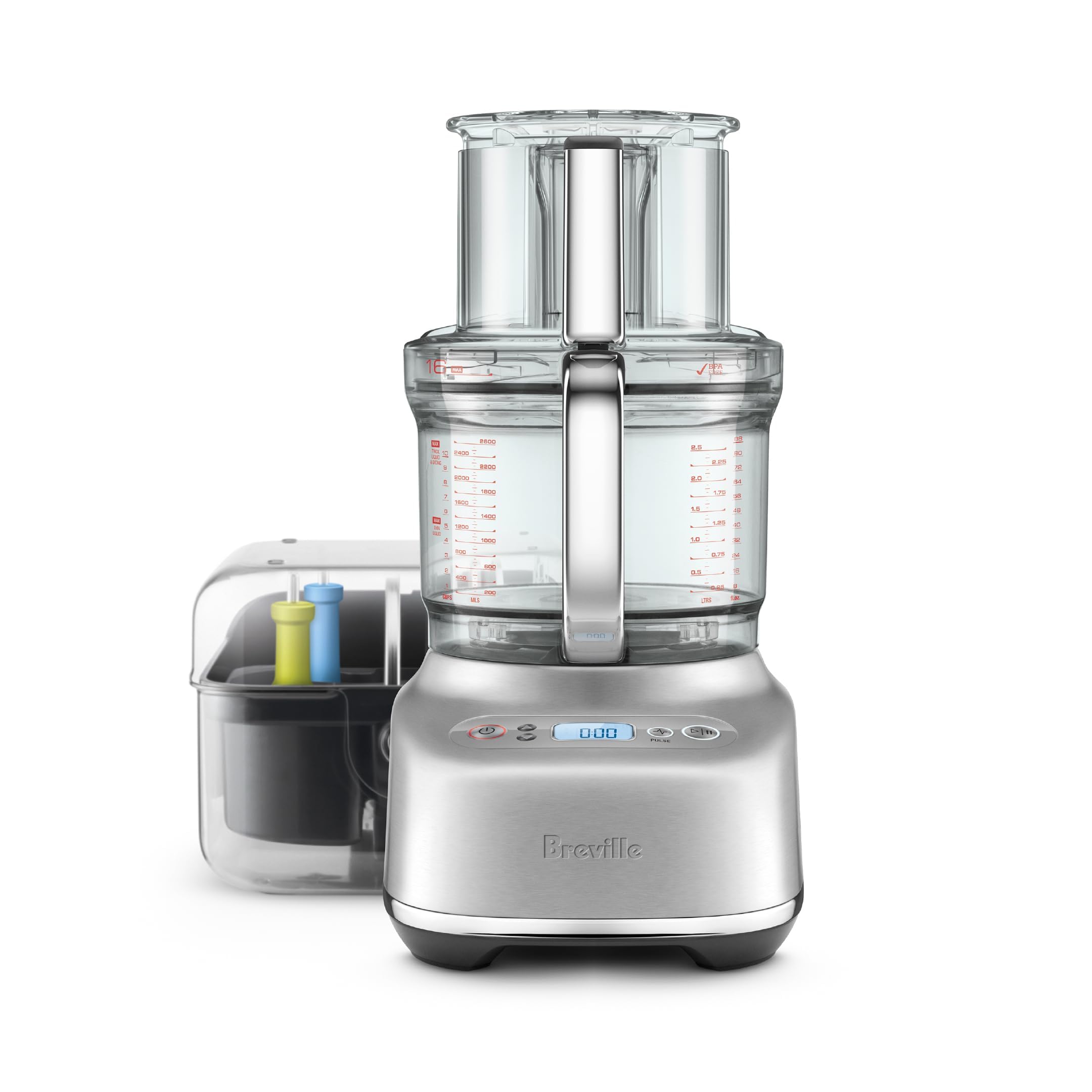
The Breville BFP810 Sous Chef 16 pairs a heavy-duty induction motor with a 16-cup bowl. The direct drive motor has high torque and is rated at 1450 watts.
The motor carries a 30-year warranty, while the Cuisinart Custom 14 DFP-14BCNY food processor has 5 years on its motor. The 16-cup bowl also gives you more room for dough than that model's 14 cups.
The 3-in-1 feed chute runs from 1.7 in to 5.5 in, which cuts down on pre-cutting produce. Slicing is adjustable across 24 sizes.
A dough blade, micro-serrated S-blade, reversible shredding disc, French fries disc, mini bowl and mini blade are included. The mini bowl and mini blade take small jobs, so the big bowl stays free for dough.
Its limit is a single speed. The Ninja NF701 Professional XL food processor adds four Auto-iQ programs, and the Ninja Professional Plus BN601 offers 3 speeds.
The parts are dishwasher safe, the bowl is BPA-free, and a storage container holds the attachments. It suits bakers and batch cooks with counter space who want a large bowl and a long motor warranty.
- Brand: Breville
- Bowl capacity: 16 cups
- Motor power: 1450 W
- Voltage: 120 V
- Weight: 30.6 lb
- Dimensions: 9.2 in deep, 11.3 in wide and 17.7 in high
Frequently asked questions
Dough work rewards short bursts, cold liquid and a batch that fits the machine's published dough rating.
What does a published dough rating tell you that a wattage figure does not?
A wattage number is a ceiling that describes a short burst, not sustained work against a stiff dough. A dough rating is the maker stating the machine was designed for the job, and it gives you a flour or dough limit to match your batch against. When a maker publishes one, treat it as the clearest signal of dough capability and size your recipe to it rather than to the bowl's cup figure.
Why does my dough ball climb up the sides of the bowl instead of staying under the blade?
Dough climbs when it is too wet or too stiff for the blade to keep folding it back down, so it creeps up the bowl wall and packs into a hard lump that loads the motor. Stop the machine, scrape the bowl down, and add a tablespoon of flour while it runs if the dough is slack and sticky. Keep to short pulses with a scrape between bursts so the dough keeps moving under the blade rather than balling up around it.
Can you get a dough hook for a food processor?
No. No maker sells a hook for a processor bowl, so kneading is done with the dough blade or the metal S-blade that came with the machine.
Should I mix raisins or nuts into the dough inside the food processor?
No. Stir them in once the dough has finished kneading, since mix-ins do not need the blade and only increase the resistance the motor has to work against. Keeping them out of the bowl also protects the dough from extra friction heat.
Why does whole-grain or sweet dough have a lower limit than white bread dough in a food processor?
Whole-grain and enriched doughs are rated lower than white bread dough because the machine has to work harder on them. Bran interrupts gluten development, and added fat and sugar soften and moisten the mixture, so the load on the motor is greater for the same amount of flour. Keep those batches under the maker's separate whole-grain and sweet dough limits rather than the white bread figure, and split the recipe if it goes over.
Why does my dough get hot, and why didn't my bread rise?
The blade and bowl add warmth to the dough, and yeast suffers once it gets too hot. Use cold or ice water and short bursts, and keep the finished dough around 75 to 80°F.
Does a heavier food processor stay put better than a light one when kneading stiff dough?
Yes. Mass and suction feet are what keep a machine planted, and a heavy base stops a light machine from moving around once the dough ball forms and starts hitting the bowl. The Breville BFP810 Sous Chef 16 is the heaviest machine here at 30.6 lb, while the Ninja NF701 Professional XL sits at 12.3 lb and the Cuisinart Custom 14 at 18 lb. If you knead regularly, that extra weight is one of the design characteristics that matter most.