
Best Baby Food Processor 2026: Steaming and Blending Purees in One Machine
When you buy through the Amazon links on this page, we may earn a commission at no extra cost to you. Learn more
Last updated October 30, 2026
A baby food processor is a compact electric appliance that steam-cooks food in a basket and then blends it in the same bowl, so a fresh puree takes one machine and one wash-up. Evla's BFMWHITE01 is the best pick for most parents starting solids: its 20.3 oz (600 ml) bowl, touch controls and adjustable steaming time and blending speed carry a batch from first smooth spoonfuls to lumpy mash.
The five machines here run from a blend-only system with a full set of storage cups to a 4-in-1 steam, blend, defrost and reheat unit with a stainless reservoir. Batch size by stage, texture progression, freezing and reservoir care decide which one fits your kitchen.
The best baby food processors of 2026
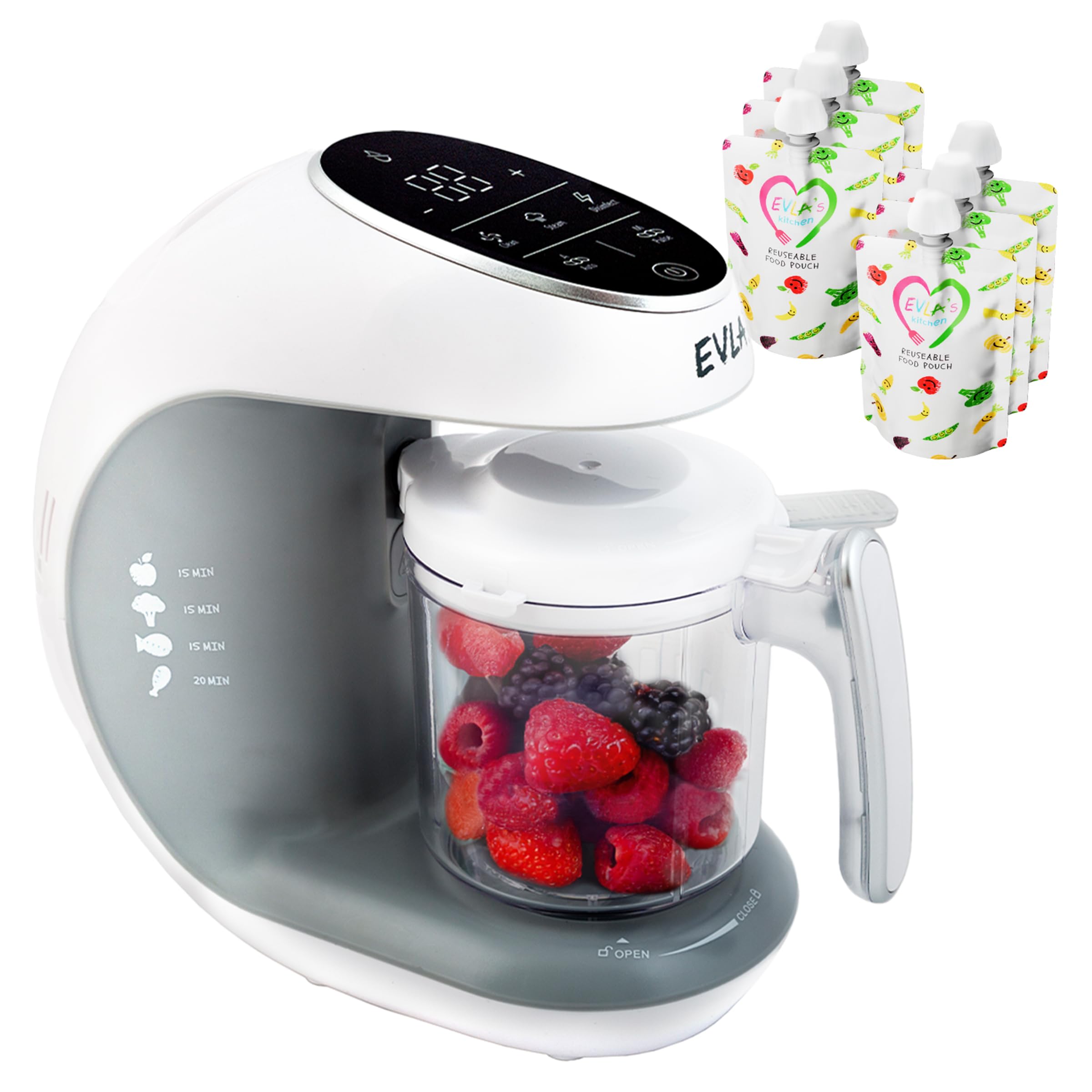
Evla's BFMWHITE01 baby food maker
See on Amazon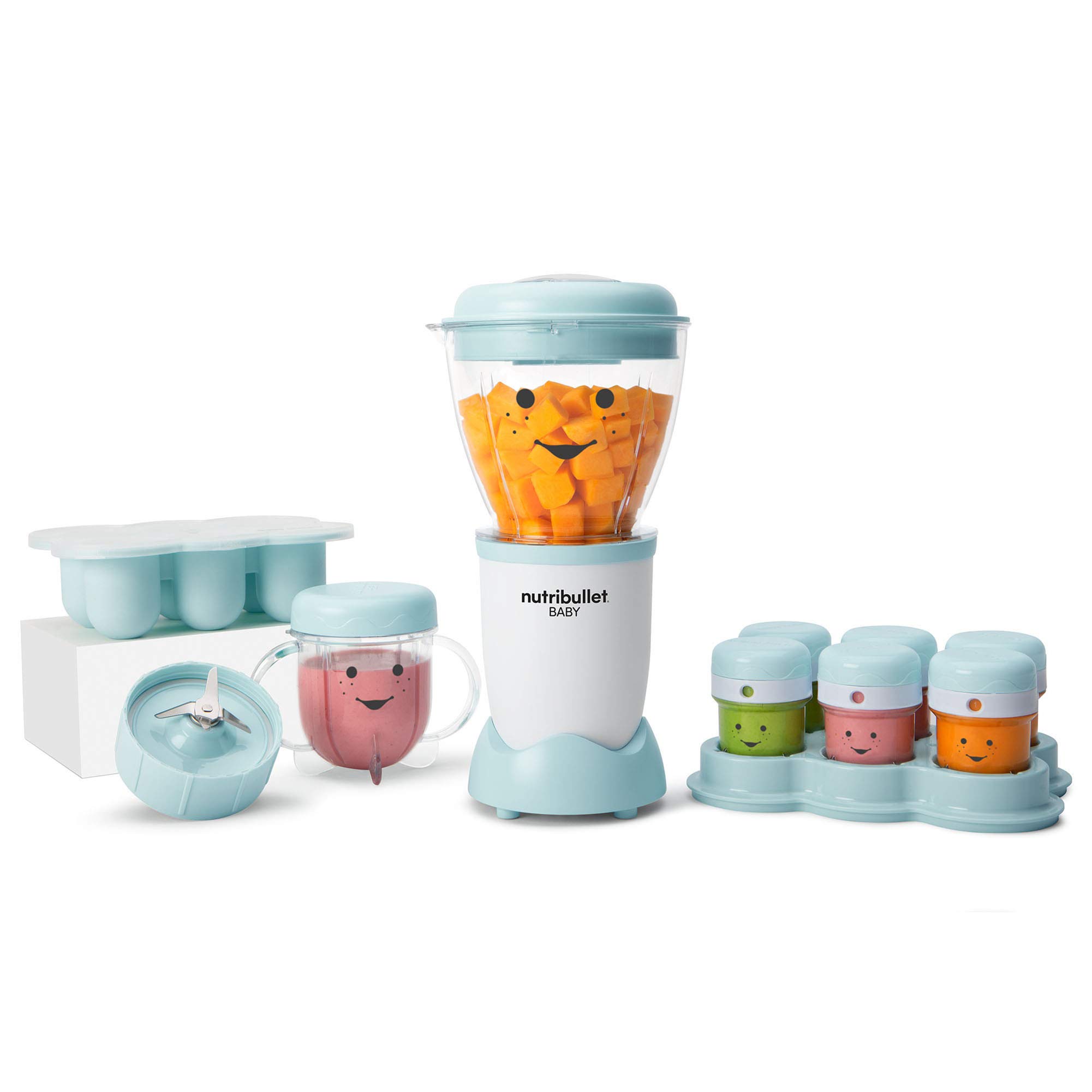
NutriBullet Baby NBY-50100
See on Amazon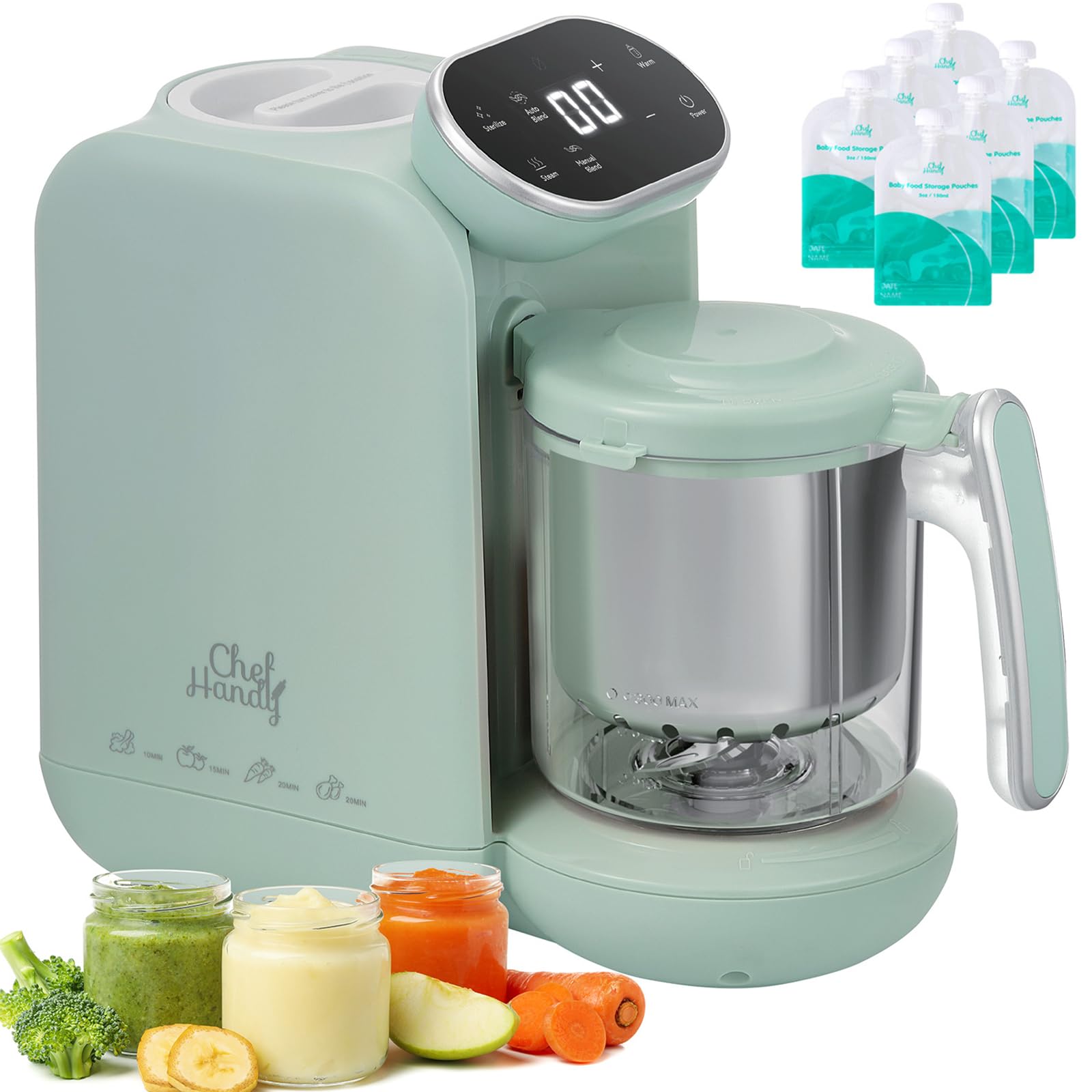
Chefhandy BFP-1600E baby food maker
See on AmazonModel comparison
| Model | Price | Rating | Power source | Voltage | Power | Best for | |
|---|---|---|---|---|---|---|---|
| | Evla's BFMWHITE01 baby food maker | $89.96 as of 10/31 See on Amazon | ★ 4.7 (9,500+ ratings) | AC adapter | 120 V | 120 W | Parents wanting one compact machine with fine control over steam time and blend speed get adjustable settings plus six reusable pouches for days out. |
| | NutriBullet Baby NBY-50100 | $49.99 as of 10/31 See on Amazon | ★ 4.6 (15,400+ ratings) | Corded electric | 120 V | 200 W | Parents who already steam on the stove get blending plus a full storage system in one purchase. |
| | Chefhandy BFP-1600E baby food maker | $66.99 as of 10/31 See on Amazon | ★ 4.6 (3,200+ ratings) | not stated | 120 V | 300 W | Parents wanting a stainless steam basket, a 2-year warranty and bottle warming and sterilizing in the same machine find all three here. |
 | Grownsy BFP-5800E baby food maker | $89.99 as of 10/31 See on Amazon | ★ 4.6 (2,800+ ratings) | Corded electric | not stated | not stated | Parents making small first-stage batches want the steam cycle automated in the smallest footprint, and the 300 ml bowl and sterilizer mode answer that. |
 | Béaba Babycook Solo | $129.99 as of 10/31 See on Amazon | ★ 4.4 (1,700+ ratings) | not stated | not stated | not stated | Parents batch-cooking and freezing, or wanting defrost and reheat in the same machine, get a 4.6 cups bowl and four functions. |
How a baby food processor differs from a full-size food processor
A full-size food processor purees, but it does not cook. A baby food processor adds a steam cycle: a measured water reservoir, a steam basket that holds the food above the water, and a blending blade in the same container. One machine takes a raw carrot to puree without a pot, a steamer basket and a second bowl.
The second difference is scale. A first-stage portion is a few tablespoons, and a full-size bowl spreads that into a ring the blade never reaches. A baby food processor's container is sized to the portion, from 10.1 oz (300 ml) to 4.6 cups (1064.6 ml), so the food stays under the blade.
The third is that the cooking cycle is timed and automatic. The machine shuts off when the reservoir runs dry and beeps when cooking is done, so you do not watch a pot.
When a regular processor plus a pot is the better tool
If the family already owns a food processor and is comfortable steaming on the stove, that processor purees cooked food perfectly well. The baby machine's value is fewer steps and fewer dishes, not a texture a processor cannot reach. Buy one for convenience, not for a result you cannot get otherwise.
What a steam-and-blend machine cannot do
A steam-and-blend machine's container is small, so it is a puree machine, not a chopping or dough machine. After the puree stage it is limited to small blends, smoothies and steamed vegetables. If you want one appliance for family cooking, a food processor is the more versatile buy.
Steam cooking and blending in one bowl
Water goes in the reservoir, food goes in the perforated steam basket above the water, and the lid locks. Steam rises through the basket, and condensation and drips fall back rather than pooling in the food. Then the basket comes out, or the bowl is inverted depending on the design, and the same container takes the blade for blending.
Why the order matters for texture
Food steamed until it collapses under a fork blends smooth in seconds. Food steamed short of that stays fibrous and blends grainy no matter how long the blade runs. The steam cycle, not the blade, decides whether the puree will be smooth.
Why the order matters for nutrients
Steaming above the water, rather than boiling in it, keeps water-soluble vitamins B and C from leaching into the cooking water, and the basket drains excess water away from the food. Reserve any liquid that collects and add it back a spoonful at a time when blending. It carries flavor and some of those vitamins.
Blade position and the safety interlock
A blade set low in the container pulls the whole batch down into it. A blade set high leaves food clinging to the bottom while the blade spins above it. That is why two machines with the same wattage give different purees. These machines also pause or refuse to run when the lid is open or not locked, and some show an error code if the latch is not seated. That is a feature of the category, not a fault.
Batch sizes for each feeding stage
Match the batch to what the baby actually eats, and the container size follows. A first-stage portion is a few tablespoons, while a batch-cooking session fills the bowl to its mark and freezes the rest.
- First tastes, around 6 months: one to two tablespoons per meal, building to about 2 to 4 oz (60 to 120 ml) over a few weeks. A 10.1 oz (300 ml) container makes several days of first-stage portions.
- Established purees: portions grow as appetite builds and meals settle into a routine, so batch size depends on how many meals a day the baby eats and how much is frozen for later.
- Lumpy and chopped: spoon-fed puree gives way to finger foods, so batch size matters less because the machine is now doing part of the work, and how much depends on how many meals are still spoon-fed.
- Toddler: family food, chopped. The machine's job is small blends and smoothies.
The practical rule is to make the batch the container holds, not the batch the recipe gives. A 4.6-cup (1064.6 ml) machine filled to its mark makes about 20 first-stage portions, and a 10.1 oz (300 ml) machine makes about 10. Freeze what is not eaten within the fridge window.
A machine also needs enough food to circulate around the blade. A single tablespoon in a large container will not blend, which is the same argument as the full-size comparison above: match the container to the portion.
Texture progression from smooth puree to lumpy mash
One machine can carry a baby through three textures if you change how long you blend and how much liquid you add. The food itself stays the same.
Stage 1, smooth and thin
Steam until the food collapses, blend continuously for 30 seconds to a minute, and add reserved liquid a spoonful at a time with the machine running until the puree drops off a spoon. Grainy almost always means under-liquided, not under-powered. Run a full minute before deciding it will not smooth out.
Stage 2, thicker and lumpy
Blend shorter, add less liquid, and use pulse rather than continuous blending. Five or six pulses leave visible soft lumps. This is the stage most parents skip too fast or linger on too long.
Stage 3, mashed and chopped
Pulse two or three times, or blend a portion and stir it back into a hand-mashed portion for a mixed texture. Soft finger foods, in pieces no bigger than about half an inch, join the spoon at this stage.
The controls that make this possible are adjustable blending speed and time, a manual blend alongside an automatic blend cycle, and a pulse function where the sheet lists one. A machine with only one automatic cycle can still reach all three textures by stopping the cycle early; manual control just makes the timing easier to repeat. A low-set blade gives even lumps, while a high-set blade leaves chunks at the edge and liquid in the middle. Introduce one single-ingredient food at a time, three to five days apart, so a reaction can be traced, and introduce common allergens early rather than delaying them.
Freezing and reheating puree safely
Freeze in ice-cube trays, about 1 oz (2 tablespoons) per cube, for first-stage portions, or in the small storage cups that come with some machines, such as 12 oz (355 ml) cups with date-ring lids and a tray, or a silicone freezer tray. Label with food and date.
Transfer cubes to labeled bags or containers once solid. Hold liquid back if freezing: a thicker puree takes less space, and you can thin each portion at serving.
Fridge and freezer limits
Homemade puree keeps for days in the fridge and months in the freezer, and the window shortens with meat, fish and egg, which spoil fastest. Never refreeze thawed food, and use thawed puree within 48 hours.
Reheating and the half-eaten portion
Reheat thoroughly to 165 °F, stir, let stand 30 seconds, check the temperature, and serve lukewarm. Do not microwave meat or egg purees, because fat splatters, and do not microwave in a plastic storage cup: decant to a bowl. Saliva contaminates a portion, so do not put what the baby has eaten from back in the fridge or freezer. Serve from a separate bowl.
Containers that fit the batch sizes
4 oz glass blocks with volume markings suit first-stage cubes, and 12 oz (355 ml) cups suit stage 2. Avoid plastic recycling codes 3, 6 and 7 for hot food, hand-wash plastic, and retire scratched or cloudy containers.
Steam, condensation and cleaning the reservoir
The reservoir is the part a plain food processor bowl does not have, and it is the part that causes trouble. Water sits in it, minerals deposit, and condensation travels the steam path into the lid and around the blade hub.
Descaling the tank
Fill the reservoir with a water and white vinegar solution, let it sit, tip it out, then run two plain-water steam cycles to rinse. Some brands say to leave it overnight. Mineral residue in the tank is scale, not rust, and diluted white vinegar removes it. Descale every few weeks in normal water and more often in hard water.
Drying the steam path
Dry the reservoir and steam path after each use, and leave the lid off to air. A sealed, damp reservoir is where mold and odor start.
Cleaning the blade and the bowl
Run a blend of warm water and a drop of detergent for 10 to 20 seconds, then rinse, and use a bottle brush around the blade hub. Rinse immediately, because dried starch is the hard part. Some machines list dishwasher-safe bowl and blade, others specify hand wash only: follow the sheet, and hand-wash plastic parts even when the dishwasher is allowed.
Keeping food out of the reservoir
Use the blending lid, not the steam lid, when blending, so food does not travel into the reservoir. Check that the sealing ring is seated and the blade holder is locked before each blend. The basket and its contents are hot when the steam cycle ends, so lift by the handle, and never fill past the maximum line: overfilling pushes food and water into the steam path.
Our picks by budget
The NutriBullet Baby NBY-50100 is our budget pick because it puts the whole storage and portioning kit in the box, with a 200 W blender for food you cook on the stove.
The Grownsy BFP-5800E is our mid-range pick because it adds the steam cycle in a 300 ml (10.1 oz) bowl sized to first-stage batches, with automatic and manual blending and a sterilizer mode.
The Béaba Babycook Solo is our premium pick because it brings capacity, defrost and reheat cycles, a stainless-steel reservoir and the widest set of food-contact certifications here.
Budget
Mid-range
High-end
Which baby food processor for which parent
The right machine depends on whether you cook on the stove already, how big a batch you freeze, and whether you want bottle warming and sterilizing in the same footprint.
Lowest outlay, cooks on the stove
You already steam or boil vegetables in a pot and want the blending plus the storage kit in one purchase. The batch bowl, six storage cups and freezer tray cover the puree stage from day one.
Small first-stage batches
You are starting solids and want one small machine that steams and blends, with a sterilizer mode for bottles. The 300 ml (10.1 oz) bowl keeps a few tablespoons under the blade.
Stainless basket, longer warranty
You want a stainless steam basket that resists stains, bottle warming and sterilizing in the same machine, and a 2-year warranty.
Fine control over texture
You want touch controls, adjustable steam time and blending speed, and a self-clean cycle, with reusable pouches included for transport.
Batch cooking and freezer stashes
You want to fill a 4.6-cup (1064.6 ml) bowl, freeze the surplus, and defrost and reheat it in the same machine. The stainless reservoir and the certification list add peace of mind.
Our verdict on the best baby food processor
Evla's BFMWHITE01 is the overall pick for the puree job: it steams and blends in one 20.3 oz (600 ml) bowl, and its adjustable steam time and blending speed carry a batch from smooth to lumpy without a second appliance. The NutriBullet Baby NBY-50100 is the least expensive, and the Béaba Babycook Solo is the pick for batch cooking and freezer stashes.
Container size matched to the portion decides satisfaction more than any spec, followed by how easy the reservoir is to descale and dry. The puree stage is short, so buy for the batch size you will actually make, and check what the machine does after the baby stage before paying for capacity you will not use.
Detailed model analysis
A steam cycle that cooks food soft enough to blend smooth matters more than wattage, because the blade cannot rescue a vegetable that was pulled off the steam too early.
Evla's BFMWHITE01 baby food maker
Evla's BFMWHITE01 steams, blends and purees in one machine. You add water to the tank, load the food, steam it, then blend in the same cup. Steaming first cooks food through instead of leaving it raw in the middle.
The 20.3 fl oz (600 ml) container holds a full batch of fruit, vegetables or meat. A touch screen lets you adjust blending speed, temperature and steaming time, so you can move from smooth purees to thicker textures.
The blade is stainless steel. The machine runs on 120 V through an AC adapter at 120 W. For cleanup, add water and a drop of detergent, press the Clean button, and it rinses itself.
Six reusable food pouches come in the box, along with a spoon, so you can pack purees for days out.
Mind two limits. Fill water only to the Max Line, or the tank leaks during steaming. The stirring cup must sit correctly on the base, or error E1 appears and no steam is made.
It suits parents who want one compact machine with fine control over steam time and blend speed.
- Brand: Evla's
- Power source: AC adapter
- Voltage: 120 V
- Power: 120 W
- Blade material: Stainless steel
- Cleaning: Self cleaning
NutriBullet Baby NBY-50100
NutriBullet Baby NBY-50100 is a blending and storage system, not a steamer, so it fits parents who cook food another way first.
Its 200 W motor base drives a blending blade in a 32 oz batch bowl. A 12 oz short cup with handles and a re-sealable lid handles smaller portions.
Storage is the strength. You get six storage cups with date ring lids and a tray, plus a silicone freezer tray with a lid, so you can puree, portion, label and freeze. A recipe book is included.
It blends, chops, mixes and purees. The bowl and cups are BPA-free, non-toxic plastic. It runs on 120 V from a cord.
The limits: it has no steaming function, so you steam on the stove first. It also has a single speed, so texture depends on how long you run it.
It suits parents who already steam on the stove and want blending plus a full storage system in one purchase.
- Brand: NutriBullet
- Power: 200 W
- Voltage: 120 V
- Batch bowl capacity: 32 oz
- Power source: Corded electric
- Dimensions: 5.4 in deep, 5.2 in wide and 11 in high
Chefhandy BFP-1600E baby food maker
The Chefhandy BFP-1600E steams and blends, and adds bottle warming and sterilizing to the same machine. Food cooks in a stainless steel steam basket above the water, so ingredients do not boil in it.
Choose auto blend for a quick puree, or manual blend to control time and texture yourself. The stainless steel blade sits in a BPA-free Tritan cup, and the cup and blade detach for rinsing.
The cup holds about 25.4 fl oz (0.75 liters), but about 10.1 fl oz (300 mL) per batch is the recommended maximum. Steaming calls for up to about 10.1 fl oz (300 ml) of water. It runs at 300 W on 120 V and weighs 4.9 lb.
Safety features include a lid-open auto pause, a safety lock, a water-shortage alert and dry-heating protection.
It is hand wash only and built for single-serve meals or small batches, not bulk prep. Error E1 shows if the cover is not closed or the latch is not locked.
Six BPA-free pouches and a recipe guide come with it. We find it suits parents who want a steam basket, a 2-year warranty and bottle warming and sterilizing in one machine.
- Brand: Chefhandy
- Blending cup capacity: 0.75 L
- Power: 300 W
- Voltage: 120 V
- Weight: 4.9 lb
- Dimensions: 12 in deep, 5.6 in wide and 11 in high
Grownsy BFP-5800E baby food maker
Grownsy BFP-5800E steams and blends in one compact machine made for babies 6 months and older. An elevated steaming basket holds food above the water, so it steams instead of boiling, which helps protect water-soluble vitamins B and C.
Digital controls offer two mixing modes. Auto does the work for you, while manual mode lets you set the consistency. Cut ingredients small and adjust the water for each ingredient to get the texture you want.
The blender container stands 4.13 in high with an outer diameter of 4.17 in. Its about 10.1 fl oz (300 ml) capacity suits small first-stage batches, but it also keeps each batch small.
The bowl is Tritan, heat-resistant and free from BPA, lead, phthalates and latex. Parts detach for cleaning, and the machine pauses automatically when you open the lid. A sterilizer mode is built in.
It also makes juice and steamed vegetables for the family. A recipe book and user manual come with it, plus a 1-year warranty. It suits parents making small first-stage batches who want an automated steam cycle.
- Brand: Grownsy
- Capacity: 300 ml
- Power source: Corded electric
- Bowl material: Tritan
- Container height: 4.13 in
- Container outer diameter: 4.17 in
Béaba Babycook Solo
Béaba Babycook Solo does four jobs in one appliance: it steam cooks, blends, defrosts and reheats. Food sits in an elevated steam basket above the water, and a full batch cooks in 20 minutes.
A patented double curved blade lets you control texture, from ultra-fine puree to a chunky mix. It also makes soft solids for baby-led weaning. The Tritan bowl has graduation markings, and the reservoir is stainless steel.
It beeps 3 times when cooking ends and shuts off when the water has evaporated. A safety lock stops it starting unless the bowl and lid are locked in place. You can work with one hand.
It is certified food-contact safe by the USFDA, Health Canada, the EU, NSF International and the French Food Safety Authority, and is BPA-, lead- and phthalate-free.
Limits: containers, bowls, a spoon and a freezer tray are not included. Limescale can build up in the reservoir, so descale it with vinegar from time to time.
It suits parents who batch-cook and freeze, or who want defrost and reheat in the same machine.
- Brand: Béaba
- Capacity: 4.5 cups
- Servings per cycle: 27 servings
- Cooking time: 20 minutes
- Bowl material: Tritan
- Shutoff: Automatic timer
Frequently asked questions
Most first purees turn out grainy because the food was undercooked or under-liquided, not because the machine lacks power.
Do I need a baby food processor, or can I use a regular food processor?
A regular food processor purees cooked food well. A baby food processor adds the steam cycle so one machine cooks and blends, and its container is sized to a small portion, which is what a full-size bowl cannot do with a few tablespoons. If you already own a processor and are happy steaming on the stove, you do not need a second machine.
What is the difference between a baby food maker and a baby food processor?
In practice the terms are used for the same appliance: a compact electric machine that steam-cooks in a basket and blends in the same bowl. Some machines are blend-only systems with storage kits, so check whether the model you are considering has a steam cycle.
What size baby food processor do I need?
Go by the smallest amount you will actually blend. A first-stage portion is one to two tablespoons, so look for a bowl that keeps that little food under the blade; anything smaller than about 10.1 oz (300 ml) tends to leave a few tablespoons spread too thin to catch. At the other end, a bowl much beyond 4.6 cups (1064.6 ml) is more capacity than the puree stage needs. Pick the smallest bowl that still holds the batch you freeze, and check the maximum fill line before you buy.
Why is my baby food puree grainy?
Almost always because the food was not cooked soft enough or there is not enough liquid. If it still looks grainy, the food was likely undercooked rather than the blade too weak.
Can I steam and blend in the same machine without washing between?
Yes, that is the point of the shared container. Lift out the hot steam basket, fit the blending lid and blade, and blend in the same bowl.
How often should I descale the steam reservoir?
Sooner than the calendar suggests if you see a chalky film on the reservoir floor or the steam cycle starts leaving more condensation than usual. Hard water deposits minerals faster than soft water, so let what you see in the tank set the interval rather than a fixed count of weeks.
Can I puree raw meat in a baby food processor?
No. Cook meat, poultry and fish to a safe internal temperature first, remove skin, fat, bones and gristle, then puree. Raw meat also carries bacteria that a steam basket will not reliably clear once the food is packed tight.
What can I use the machine for after the baby stage?
Small blends, smoothies, juices and steamed vegetables. A large bowl handles family portions, while a compact bowl tops out at about 10 first-stage portions per batch, so it stays a small-blend machine once the puree stage ends.